Supreme Court Backs Gun Rights for Cannabis Users
Key Takeaways
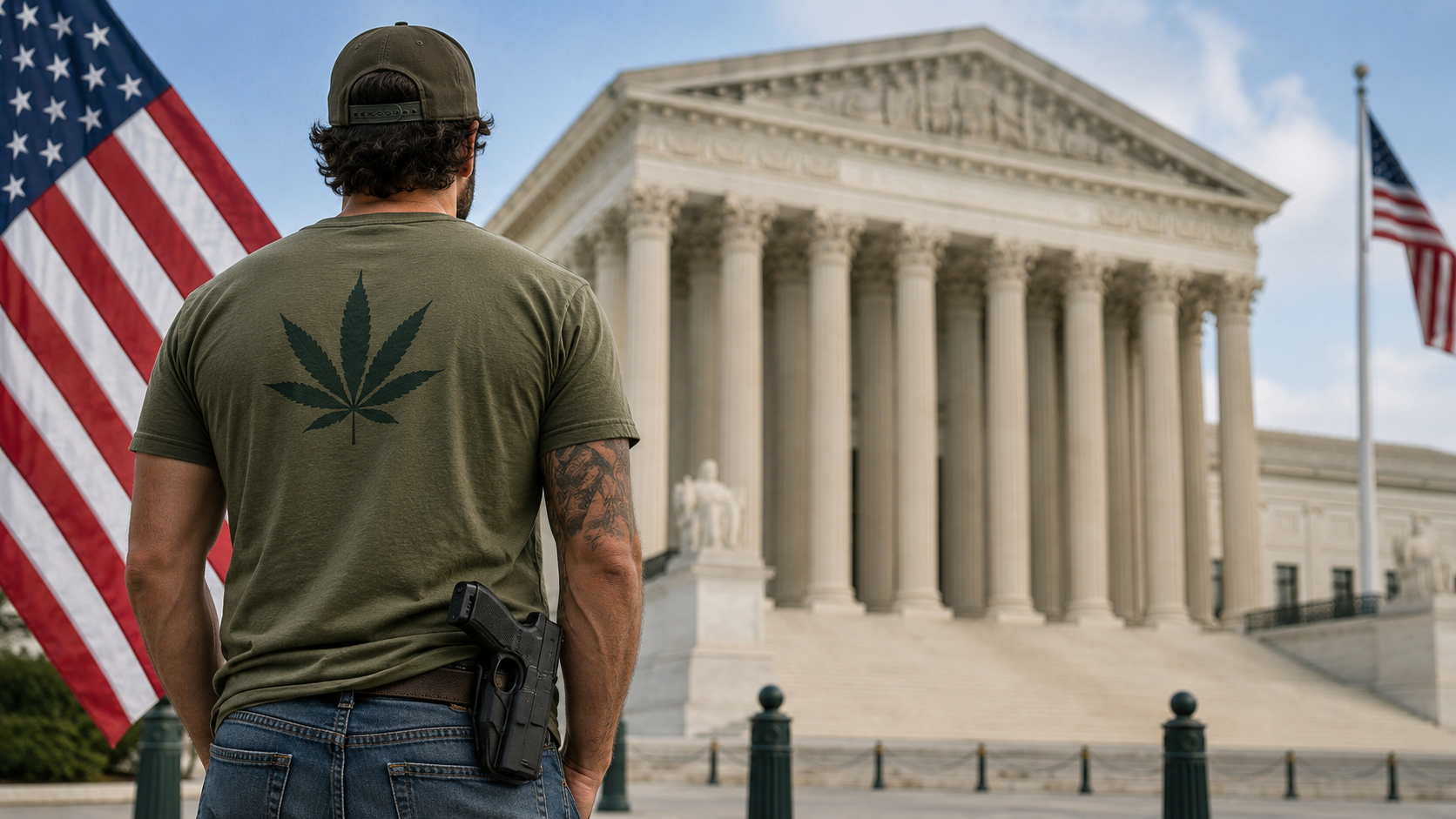
- The U.S. Supreme Court unanimously ruled in favor of a Texas marijuana user who challenged a federal firearm ban.
- The Court found that the government failed to prove that the individual posed a danger sufficient to justify depriving him of his Second Amendment rights.
- The ruling does not completely strike down the federal law that prohibits unlawful drug users from possessing firearms.
- Millions of cannabis consumers could be affected by the decision, particularly in states where marijuana is legal.
- The case highlights the growing conflict between state cannabis legalization and federal law.
Supreme Court Delivers Major Victory for Cannabis Consumers
The United States Supreme Court has issued a landmark ruling that could have significant implications for millions of Americans who consume cannabis and own firearms.
In a unanimous 9-0 decision, the Court sided with Texas resident Ali Danial Hemani, who was charged under a federal law that prohibits firearm possession by anyone who is considered an unlawful user of a controlled substance. Because marijuana remains federally illegal, cannabis consumers can potentially lose their gun rights even if they live in a state where cannabis is legal.
Justice Neil Gorsuch, writing for the Court, concluded that the government failed to demonstrate that Hemani’s cannabis use made him sufficiently dangerous to justify stripping him of his constitutional right to possess firearms. The Court emphasized that broad assumptions about cannabis users are not enough to overcome Second Amendment protections.
What Was the Case About?
The case began after federal authorities searched Hemani’s Texas home and discovered a firearm along with cannabis. Hemani admitted to being a regular cannabis user and was subsequently charged under Section 922(g)(3) of the Gun Control Act, a federal law that prohibits firearm ownership by unlawful users of controlled substances.
Hemani challenged the law, arguing that it violated his Second Amendment rights. Lower courts agreed, and the Supreme Court ultimately upheld those decisions.
The Court Did Not Legalize Guns for All Drug Users
While cannabis advocates are celebrating the decision, the ruling is narrower than some headlines suggest.
The Supreme Court did not completely invalidate the federal statute. Instead, the justices ruled that the government cannot automatically assume every marijuana user is too dangerous to own a firearm. The Court left open the possibility that individuals who are intoxicated while possessing firearms, or who present a genuine public safety risk, may still be prohibited from owning guns.
In other words, the government may still restrict firearm ownership in certain situations, but broad, one-size-fits-all bans face a much higher constitutional hurdle after this ruling.
Why This Matters for Cannabis Consumers
The decision comes at a time when cannabis laws continue to evolve across the United States. Recreational or medical cannabis is now legal in most states, yet cannabis remains a Schedule I controlled substance under federal law.
This legal contradiction has created numerous challenges for consumers, including employment issues, banking restrictions, and firearm ownership questions. The Hemani ruling is one of the most significant court decisions yet addressing the collision between modern cannabis legalization and outdated federal regulations.
For responsible cannabis consumers who legally own firearms under state law, the decision may provide stronger constitutional protections against blanket federal restrictions. However, legal experts expect additional litigation as courts determine exactly where the new boundaries lie.
What Happens Next?
The ruling is expected to influence future Second Amendment cases involving cannabis users and could force lawmakers and regulators to reconsider how federal firearm laws apply in an era of widespread marijuana legalization.
While the decision does not immediately eliminate all federal restrictions on gun ownership for cannabis consumers, it represents a major victory for advocates who argue that responsible marijuana use alone should not automatically cost someone their constitutional rights.
As more states move toward legalization and federal cannabis reform remains under discussion, the intersection of marijuana laws and gun rights is likely to remain a major legal battleground for years to come.