Texas THC Ban Explained: What’s Legal and What’s Now Illegal
Key Takeaways
- Texas has begun enforcing a sweeping ban on many hemp-derived THC products following a Texas Supreme Court ruling.
- Delta-8, Delta-10, THCP, THCA flower, and several other hemp-derived cannabinoids are now classified as Schedule I controlled substances under Texas law.
- Hemp industry groups have filed a federal lawsuit seeking to stop the new rules.
- Consumers caught possessing prohibited products could face serious criminal penalties under Texas law.
- The lawsuit could become one of the most important legal battles for the U.S. hemp industry this year.
For years, Texas has been one of the largest markets in the United States for hemp-derived THC products. From Delta-8 gummies and THCA flower to vape cartridges and infused prerolls, thousands of licensed retailers built thriving businesses after the federal legalization of hemp in 2018.
Now, that landscape has changed almost overnight.
On August 1, 2026, Texas officially began enforcing one of the country’s toughest restrictions on hemp-derived cannabinoids. The move effectively bans many of the products that consumers have legally purchased for years and has already triggered an emergency federal lawsuit from hemp industry organizations determined to stop the crackdown.
Supporters argue the new rules are necessary to protect public health and close loopholes surrounding intoxicating hemp products. Opponents say Texas is moving backwards, recriminalizing products that have operated legally for years while threatening thousands of businesses and consumers.
The legal battle is now underway, and its outcome could influence hemp policy far beyond Texas.
What Changed?
The biggest misconception surrounding the new Texas law is that it only targets Delta-8 THC.
In reality, the changes are much broader.
Under the new rules enforced by the Texas Department of State Health Services (DSHS), nearly all synthetically produced hemp-derived THC cannabinoids are now classified as Schedule I controlled substances under state law. These include Delta-8 THC, Delta-10 THC, THCP and THCA flower, along with several other converted hemp cannabinoids.
The primary exception is hemp products containing naturally occurring Delta-9 THC that remain below the federal limit of 0.3% by dry weight, meaning certain gummies, beverages and tinctures can still legally be sold. Smokeable Delta-9 hemp products also remain temporarily available because a separate court ruling has paused enforcement of an earlier statewide ban on smokable hemp.
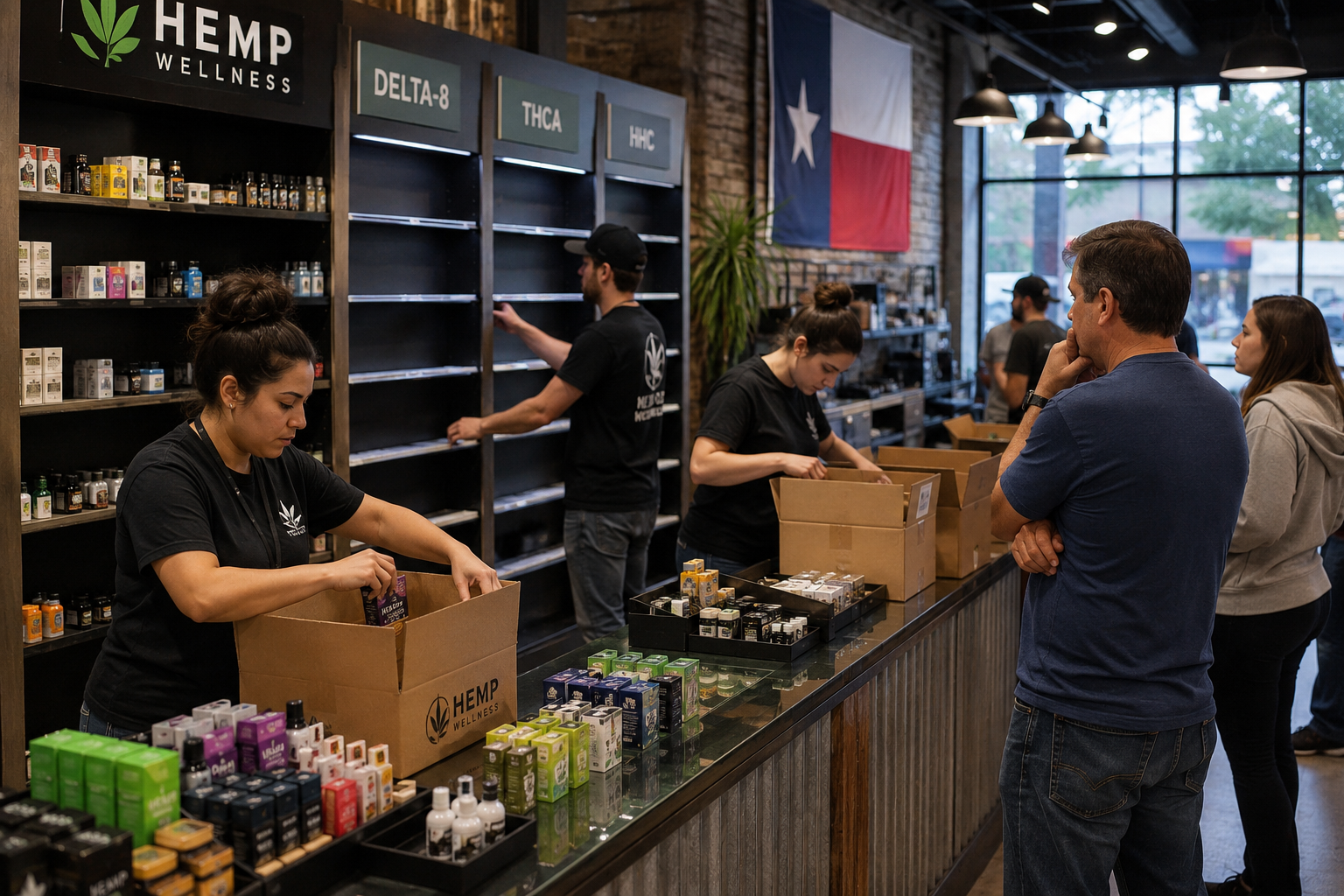
For consumers walking into a hemp store today, that means product shelves may look dramatically different than they did just weeks ago.
Why Did Texas Introduce the Ban?
The current restrictions are the result of a legal battle that has been unfolding for nearly five years.
Back in 2021, the Texas Department of State Health Services adopted a rule classifying Delta-8 THC and other synthetic hemp-derived cannabinoids as Schedule I controlled substances.
Almost immediately, hemp companies challenged the decision.
Businesses argued that the agency had exceeded its authority and contradicted the 2019 Texas Farm Bill, which removed hemp from the legal definition of marijuana and allowed hemp products that complied with federal law.
A court issued a temporary injunction that prevented Texas from enforcing the rule while litigation continued.
That injunction effectively allowed retailers to continue selling Delta-8, THCA flower and numerous other hemp-derived cannabinoids throughout Texas for the next five years.
Everything changed in May 2026.
The Texas Supreme Court ruled that the injunction should be lifted, allowing DSHS to begin enforcing its original 2021 classification. As soon as that decision took effect, the agency reinstated the rule, making many of the state’s most popular hemp-derived THC products illegal.
For many businesses, the ruling marked the end of years of legal uncertainty and the beginning of a far more restrictive regulatory environment.
Hemp Industry Fights Back
The industry’s response came almost immediately.
Shortly after the new rules took effect, several hemp organizations filed a federal lawsuit seeking an emergency injunction to stop enforcement.
Among the leading plaintiffs is the Texas Hemp Business Council, which argues that the regulations violate federal hemp law, infringe upon constitutional due process protections and unfairly harm businesses engaged in interstate commerce.
Industry representatives also argue that unelected regulators have effectively rewritten state law through administrative action rather than allowing elected lawmakers to decide the issue.
According to the lawsuit, enforcement of the new rules could cause immediate and irreversible financial damage to one of the country’s largest hemp markets.
Texas Hemp Business Council Executive Director Mark Bordas estimates the industry contributes approximately $11 billion annually to the state’s economy and supports thousands of businesses throughout Texas.
Business owners say they are now being forced to remove huge portions of their inventory almost overnight, with many questioning whether they can continue operating under the new rules.
More Than Just Delta-8
One reason this case has attracted national attention is the sheer number of products affected.
While media headlines often focus on Delta-8 THC, the practical impact extends much further.
Many hemp retailers built their businesses around a diverse range of hemp-derived cannabinoids, including THCA flower, Delta-10 products, THCP and numerous cannabinoid blends that became increasingly popular after the federal legalization of hemp.
Cannabis experts estimate that the reclassification could remove between 60% and 90% of THC products from some stores, depending on their product mix. Some retailers have already begun transitioning toward products that remain legal, but many expect significant revenue losses regardless.
For businesses that specialized primarily in hemp-derived intoxicating cannabinoids, the impact could be devastating.
What Does This Mean for Consumers?
The new rules don’t just affect hemp retailers. They also create significant legal risks for ordinary Texans.
For the past several years, products such as Delta-8 gummies, THCA flower, and other hemp-derived cannabinoids were sold openly by licensed retailers across the state. Many consumers assumed these products were legal because they were derived from federally legal hemp.
Under Texas’ new enforcement policy, that assumption may no longer be true.
Because many hemp-derived THC products are now classified as Schedule I controlled substances, possession can carry severe criminal penalties depending on the amount involved. While exact charges depend on the quantity and circumstances of each case, the potential penalties include:
- Less than 1 gram: State jail felony punishable by 180 days to 2 years in a state jail facility and a fine of up to $10,000.
- 1 to less than 4 grams: Third-degree felony punishable by 2 to 10 years in prison and a fine of up to $10,000.
- 4 to less than 400 grams: Second-degree felony punishable by 2 to 20 years in prison and a fine of up to $10,000.
- 400 grams or more: First-degree felony punishable by 5 to 99 years, or life imprisonment, and a fine of up to $50,000.
For businesses, the consequences can be even more severe. Retailers caught selling prohibited cannabinoids may lose their consumable hemp licenses, face substantial civil penalties and potentially face criminal charges for manufacturing or distributing Schedule I controlled substances.
While prosecutors will ultimately decide how aggressively these laws are enforced, legal experts advise consumers to carefully review the status of any hemp-derived THC products they possess. Products that were sold legally just weeks ago may now fall under Texas’ controlled substances laws.
Which THC Products Are Still Legal?
The situation has understandably caused confusion.
Although many headlines describe the changes as a “Texas THC ban,” not every hemp-derived product has become illegal.
Under current rules, consumers can still legally purchase products containing naturally occurring Delta-9 THC, provided they remain within the federal hemp definition of less than 0.3% Delta-9 THC by dry weight.
That means products such as:
- Delta-9 gummies
- Hemp beverages
- Tinctures
- Certain edible products
remain available if they comply with federal hemp regulations.
Smokeable Delta-9 hemp products are also still available for now because a separate court ruling has temporarily paused enforcement of Texas’ planned ban on smokable hemp.
By contrast, products containing cannabinoids such as Delta-8 THC, Delta-10 THC, THCP and THCA flower have become the primary targets of the new enforcement policy.
The distinction is confusing even for experienced consumers, which is one reason industry groups argue the regulations create uncertainty for both businesses and the public.
Why Texas Says the Ban Is Necessary
State officials maintain that the crackdown is intended to protect public health rather than target the hemp industry itself.
The Department of State Health Services has long argued that chemically converted hemp-derived cannabinoids should not be treated the same as naturally occurring hemp compounds because they produce intoxicating effects similar to traditional cannabis.
Supporters of stricter regulation also point to data from the Texas Poison Center Network, which has recorded a sharp increase in cannabis-related poisoning calls since hemp-derived THC products became widely available. According to state data, calls increased from 923 cases in 2019 to 2,669 last year, with many involving suspected exposure among young children and teenagers.
Organizations supporting tighter restrictions argue that the rapid expansion of intoxicating hemp products has outpaced regulation and created unnecessary risks for consumers.
Many in the hemp industry disagree.
They argue that licensed retailers already operate under strict regulations, including age restrictions requiring customers to be at least 21 years old, and believe prohibition will simply push consumers toward unregulated black-market products.
Critics, however, argue that the state’s public health justification raises obvious questions. They point out that products such as alcohol and tobacco, both of which are associated with significant long-term health risks and thousands of preventable deaths each year, remain widely available. At the same time, Texas is moving to criminalize hemp-derived cannabis products that many adults have legally used for years. Whether this approach genuinely protects public health or simply revives another chapter of cannabis prohibition will likely remain at the center of the debate.
An $11 Billion Industry Under Pressure
The economic consequences of the ban could be enormous.
According to the Texas Hemp Business Council, the state’s hemp industry generates approximately $11 billion annually and supports thousands of jobs throughout the supply chain.
Texas currently has around 14,000 licensed consumable hemp retailers, many of which built their businesses around hemp-derived THC products following the federal legalization of hemp.
Industry experts estimate that between 60% and 90% of THC products may disappear from store shelves because of the new rules.
Some retailers expect to lose approximately one-quarter of their sales, while businesses focused primarily on Delta-8 and THCA products could lose the overwhelming majority of their inventory.
For many small businesses, the uncertainty extends far beyond lost revenue.
Owners must now decide whether to completely restructure their product offerings, relocate to more cannabis-friendly states or close their businesses altogether.
Why This Lawsuit Matters Beyond Texas
Although the case centers on Texas law, its implications could reach across the United States.
Since the passage of the 2018 Farm Bill, states have taken dramatically different approaches to regulating hemp-derived cannabinoids.
Some have embraced Delta-8 and similar products through licensing and oversight.
Others have imposed outright bans.
Texas represents one of the largest hemp markets in America. Because of its size and economic importance, the outcome of this lawsuit will likely be watched closely by lawmakers, regulators and cannabis businesses nationwide.
If the federal court blocks enforcement of the new rules, it could strengthen legal arguments that hemp-derived cannabinoids remain protected under federal law.
If Texas ultimately prevails, other states may view the decision as a roadmap for introducing similar restrictions.
Either outcome could reshape the future of the American hemp industry.
Looking Ahead: Is This Only the Beginning?
For many observers, the August crackdown may not be the final chapter.
Texas lawmakers have spent several years debating increasingly strict hemp regulations, and additional legislative changes are expected later this year. Many industry observers believe the state could pursue even broader restrictions on hemp-derived cannabinoids in November, potentially placing further limitations on products that currently remain legal.
As a result, the current lawsuit is unlikely to be the end of the story.
Instead, it may represent the opening battle in a much larger conflict over the future of hemp in Texas.
Consumers, retailers and manufacturers should expect continued legal uncertainty while courts determine whether the state’s actions comply with both federal hemp law and constitutional protections.
For businesses operating in the cannabis and hemp industries, the coming months could prove to be some of the most significant since the passage of the 2018 Farm Bill.
Final Thoughts
Texas has taken one of the most aggressive steps yet against hemp-derived THC products, and the consequences are already being felt across the state.
Thousands of businesses are scrambling to adapt, consumers are trying to understand which products remain legal, and industry organizations have launched what could become one of the year’s most important cannabis lawsuits.
Whatever the courts ultimately decide, one thing is already clear: the legal battle over hemp-derived cannabinoids is far from over.
The outcome of this case will not only determine the future of Delta-8, THCA flower and other hemp products in Texas, but could also influence cannabis policy discussions across the United States for years to come.