Weed Prices by State in 2026: Why an Eighth Costs $13 or $30
Key Takeaways
- A packaged eighth of cannabis flower averaged $12.74 in Oregon and $29.54 in Ohio in September 2026.
- The comparison covers 12 US states, with prices measured after discounts and before taxes.
- Ohio’s average was about 2.3 times Oregon’s for the same 3.5-gram package size.
- Supply, competition and the way each state’s legal market developed help explain the price differences.
- These are market averages across different products, so they don’t show which state sells better cannabis.
Ask a few people what they pay for an eighth, and the answers can sound like they come from completely different countries.
In Oregon, a packaged 3.5-gram eighth averaged $12.74. In Ohio, it averaged $29.54. That is a $16.80 difference for the same amount of flower, with Ohio’s average roughly 132% higher.
Those figures come from cannabis analytics company Headset’s September 2026 data. They illustrate a familiar consumer frustration: legal access can come with a very different price tag depending on where you live.
So what is behind the gap?
How Weed Prices Compare Across 12 States
Here is Headset’s comparison of average prices for packaged eighths, ordered from lowest to highest.
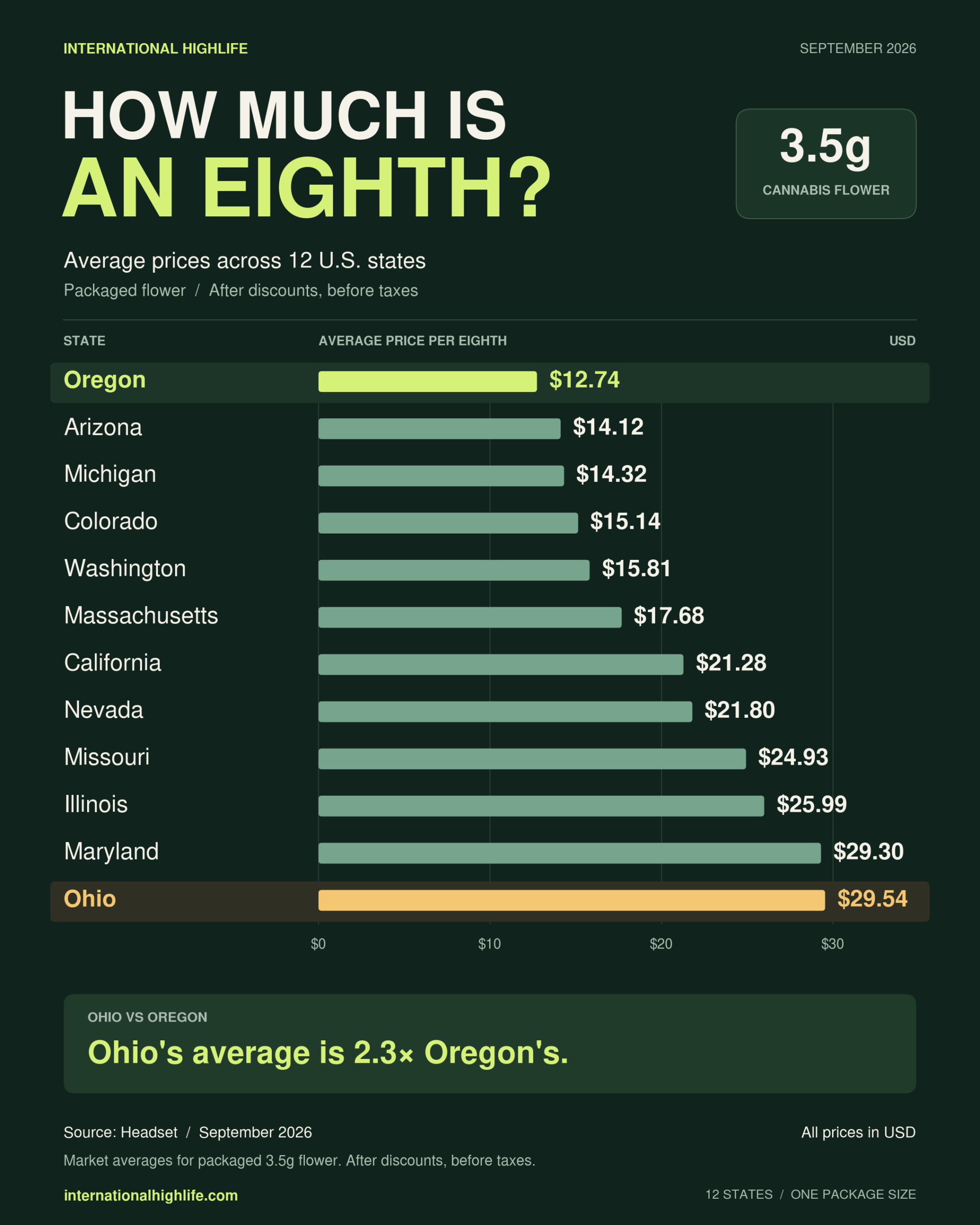
Source: Headset. September 2026 sales of packaged 3.5-gram flower, after discounts and before taxes.
These averages come from transactions at licensed retailers. Loose flower weighed out at the counter falls outside this packaged-eighth comparison.
Ohio was the most expensive of these 12 markets, with Maryland close behind. This is a defined comparison, not a ranking of every state where cannabis is legal.
Why Oregon Has Such Low Cannabis Prices
Oregon’s low prices have a well-documented supply backdrop.
In its 2025 legislative overview, the Oregon Liquor and Cannabis Commission described an ongoing oversupply problem, including a record 2024 harvest. The regulator connected excess supply with falling retail flower prices.
The economics are straightforward. When growers have more cannabis available than the market can absorb, they face pressure to reduce prices. Retailers have more inventory to choose from, and competition can encourage them to offer better deals.
That can be welcome news for consumers. For businesses, however, lower selling prices can make it harder to cover cultivation, testing, staffing and other operating costs.
Oregon’s figures therefore reflect a market with substantial existing production and a history of supply pressure. A cheap eighth can tell you something about the economics surrounding the product without telling you how good the flower actually is.
Why Ohio Is a Different Market
Ohio began adult-use cannabis sales on August 6, 2024, according to the state’s Division of Cannabis Control. Its medical market had already been operating, but recreational sales brought a new group of customers into the regulated system.
The initial adult-use licensing process was open to eligible existing medical operators. Businesses could convert to dual-use licenses to serve both markets.
That history matters. Expanding production, opening dispensaries and building competition take time. The number of businesses allowed to operate, their capacity, and their locations can all affect the choices available to consumers.
Ohio’s shorter recreational-market history helps explain its higher average. The price data alone cannot tell us exactly how much of the gap comes from supply, regulation or the mix of products people buy.
Why Surplus Cannabis Cannot Simply Move Between States
In many industries, suppliers can respond to higher prices elsewhere by shipping products into those markets.
State-licensed cannabis does not move through an open national supply chain. Oregon’s surplus cannot simply be shipped to Ohio’s dispensaries to bring prices down. Interstate restrictions keep these legal markets separated.
That allows very different supply and competition conditions to persist within the same country.
Michigan makes the contrast especially striking. Its average eighth was $14.32, less than half Ohio’s, even though the two states share a border. Physical proximity does not make their legal cannabis markets function as one.
What Prices Tell Us About Cannabis Quality
A higher state average does not establish that the cannabis sold there is better.
Each state average combines purchases of different brands, strains, and product tiers. It does not compare identical flower grown, processed and stored under identical conditions.
A market where consumers buy more premium products can have a higher average. Heavy sales of budget products can pull another market’s average down. Both effects can exist alongside differences in supply and competition.
Individual products can also command different prices because of cultivation methods, freshness, branding or limited availability. None of those qualities is measured by a state’s average eighth price.
The comparison helps show what people paid across different markets. Evaluating the flower itself requires looking beyond the state and the number on the receipt.
Package Size and Taxes Change the Comparison
Package size is another reason cannabis price discussions can get confusing.
Headset’s broader flower analysis shows that prices per gram generally fall as package sizes increase. Someone quoting the per-gram cost of a large bag may be describing a different purchase from someone buying a single gram or a premium eighth.
Multiplying an eighth’s price by eight therefore does not necessarily tell you what a separately priced ounce costs.
Taxes add another distinction. The prices in the table exclude taxes, so a final checkout total can be higher. The Oregon–Ohio gap already exists before those taxes are added; checkout taxes alone cannot explain it.
For a meaningful comparison, the weight, product type and treatment of discounts and taxes all need to match.
Legalization answers whether adults can access a regulated market. The structure of that market helps determine what they pay once they get there.
What does an eighth cost where you live? Tell us your state and whether the price includes tax in the comments.