THCA Ban 2026: What Consumers Need to Know
Key Takeaways
- Federal hemp regulations will change in November 2026, potentially reshaping the entire hemp industry.
- The changes aim at closing the loophole that allowed THCA flower and other intoxicating hemp products to flourish.
- Several states have already moved ahead with their own restrictions on THCA products.
- Products potentially affected include THCA flower, Delta-8 THC, hemp-derived THC beverages, vapes, concentrates, and edibles.
- The hemp industry argues that the changes could impact thousands of businesses and millions of consumers.
- Legal challenges and political battles are still ongoing, meaning the situation remains fluid.
For years, THCA flower existed in a legal gray area.
Consumers could walk into hemp shops across the United States and purchase products that looked, smelled, and often felt nearly identical to traditional cannabis. Thanks to a loophole created by the 2018 Farm Bill, a massive market for THCA flower, Delta-8 THC products, THC beverages, hemp-derived concentrates, and other cannabinoids emerged almost overnight.
For consumers living in states without legal cannabis, THCA became one of the most popular alternatives available. Entire businesses were built around products that technically complied with federal hemp laws while still delivering effects that many consumers associated with traditional cannabis.
Now that loophole may finally be closing.
Federal lawmakers, state regulators, and cannabis industry stakeholders are engaged in one of the biggest hemp policy battles since the legalization of hemp itself. If proposed federal changes move forward, November 2026 could mark the beginning of a dramatically different era for THCA and the broader hemp industry.
So what exactly is happening, why is THCA being targeted, and what does it mean for consumers?
Let’s break it down.
What Is THCA?
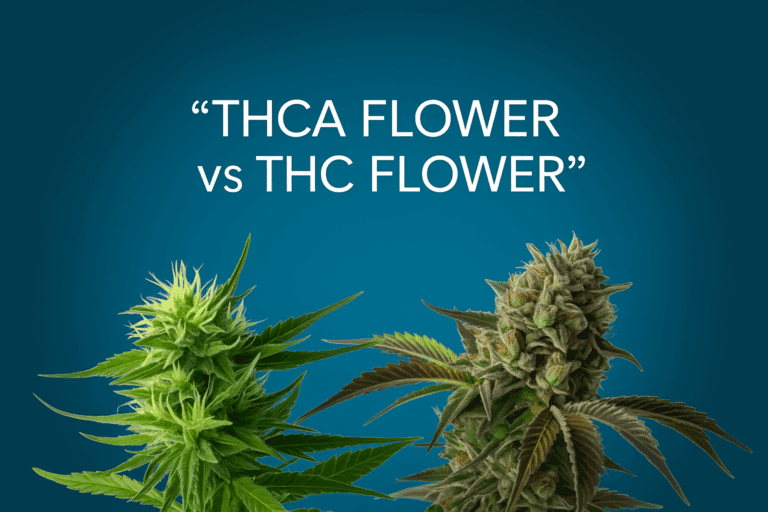
THCA stands for tetrahydrocannabinolic acid.
It is the naturally occurring precursor to THC, the primary intoxicating compound found in cannabis.
Fresh cannabis plants do not produce large amounts of Delta-9 THC directly. Instead, they primarily produce THCA. When you heat cannabis through smoking, vaping, or cooking, a process called decarboxylation converts THCA into Delta-9 THC.
This is why THCA flower can appear legally compliant on paper while still producing traditional cannabis-like effects when consumed.
In its raw form, THCA is generally considered non-intoxicating. However, once exposed to heat, it transforms into the THC that most consumers are familiar with.
How Did THCA Become Legal?
The story begins with the 2018 Farm Bill.
When Congress legalized hemp, lawmakers defined hemp based on its Delta-9 THC content. Specifically, hemp was considered legal as long as it contained no more than 0.3% Delta-9 THC by dry weight.
At the time, few people paid attention to the distinction between Delta-9 THC and THCA.
The law focused on Delta-9 THC only.
It did not focus on total THC.
It did not focus on THCA.
And it certainly did not anticipate the explosion of hemp-derived cannabinoid products that would follow.
Entrepreneurs quickly realized that cannabis flower could contain very low levels of Delta-9 THC while simultaneously containing large amounts of THCA.
On paper, the flower met the legal definition of hemp.
In practice, once smoked, it behaved very much like cannabis.
A multi-billion-dollar industry was born.
The Hemp Loophole Explained
The phrase “hemp loophole” has become one of the most commonly used terms in cannabis policy discussions.
The loophole exists because federal law focuses on a single cannabinoid measurement rather than on the actual effects of the final product.
Under the Farm Bill framework, a product could qualify as hemp if it remained below the Delta-9 THC threshold at the time of testing.
Critics argue that this allowed products with significant intoxicating potential to enter the market without the regulations typically applied to state-licensed cannabis products.
Supporters argue that businesses followed the law as written.
Regardless of where you stand politically, there is little debate that the hemp loophole fundamentally changed the cannabis industry.
It gave consumers access to products that previously would have been unavailable in many states.
It created thousands of jobs.
It generated billions in revenue.
And now it has become the primary target of regulators.
What Is Changing at the Federal Level?
The biggest proposed change involves how hemp is defined.
Rather than focusing solely on Delta-9 THC, lawmakers and regulators are increasingly moving toward a total THC approach.
Under a total THC framework, THCA would be included in the calculation.
This may sound like a minor technical adjustment, but the implications are enormous.
Many THCA flower products that currently qualify as hemp would immediately fail under total THC calculations.
The same applies to numerous intoxicating hemp-derived products that have become increasingly popular over the last several years.
Industry groups believe these changes could dramatically reduce or eliminate much of the current THCA market.
Supporters of the crackdown argue that the original intent of hemp legalization was never to create a parallel cannabis industry operating outside traditional cannabis regulations.
The debate is far from settled, but one thing is clear:
Federal regulators are no longer ignoring the THCA market.
Why Is the Government Cracking Down?
From the government’s perspective, several concerns continue to drive the push for tighter hemp regulations.
One of the biggest concerns involves consumer safety.
Many hemp-derived products entered the market with limited oversight, inconsistent testing standards, and varying levels of quality control.
Another concern is youth access.
Unlike state-regulated cannabis markets, hemp-derived products have often been sold through smoke shops, convenience stores, gas stations, and online retailers with fewer restrictions.
Lawmakers have also expressed concerns about synthetic cannabinoids, misleading product labeling, and products that may contain significantly higher levels of intoxicating compounds than consumers realize.
The hemp industry responds with a different argument.
Many business owners argue that responsible regulation would make more sense than outright prohibition. They point out that millions of adults use hemp-derived products responsibly and that thousands of businesses have built operations around existing laws.
This tension between regulation and prohibition sits at the center of the current debate.
States Aren’t Waiting for Washington
While federal regulators debate the future of hemp, many states have already taken action.
This has created a confusing patchwork of laws where a product may be legal in one state and prohibited in another.
Tennessee
Tennessee has become one of the most high-profile examples.
State lawmakers moved aggressively against THCA flower and other intoxicating hemp products, triggering significant backlash from hemp businesses and consumers.
Many retailers view Tennessee as a preview of what broader restrictions could look like nationwide.
Texas
Texas has adopted a total THC approach that directly targets THCA flower and many hemp-derived cannabinoid products.
Legal challenges continue, but the state’s position signals a clear shift away from the Farm Bill loophole.
Georgia
Georgia has implemented restrictions on smokable hemp flower and adopted regulations that make the THCA market far more difficult to operate.
Virginia
Virginia successfully defended stricter hemp regulations based on total THC calculations rather than Delta-9 THC alone.
The state’s approach has become an important example for other regulators considering similar policies.
California
Despite having one of the largest legal cannabis markets in the world, California has also moved against certain intoxicating hemp products.
State regulators argue that intoxicating cannabinoids should operate within regulated cannabis frameworks.
Arkansas
Arkansas has pursued restrictions targeting hemp-derived intoxicating cannabinoids and has become one of the more restrictive states in this area.
Colorado
Colorado, despite being one of the pioneers of cannabis legalization, has implemented rules limiting many hemp-derived intoxicating products.
Utah
Utah has also adopted restrictions affecting THCA and related products, further contributing to the growing patchwork of hemp laws.
These states represent some of the highest-profile examples, but they are far from alone. Across the country, lawmakers are increasingly moving away from the original Delta-9-only hemp definition and toward total THC calculations.
What Products Could Be Affected?
If federal changes move forward, the impact could extend far beyond THCA flower.
THCA Flower
This is the most obvious target.
Many popular THCA flower products would likely fail total THC testing standards.
Delta-8 THC
Delta-8 became one of the fastest-growing cannabinoid categories in the country.
Many proposed regulations specifically target Delta-8 products.
THC Beverages
The rapidly growing hemp beverage market could also face significant restrictions.
Hemp-Derived Edibles
Gummies, chocolates, baked goods, and other edible products may be affected depending on cannabinoid content.
Vapes & Concentrates
Many hemp-derived vape and concentrate products could face increased scrutiny under new rules.
Could Cannabis Seeds Be Affected?
One question many growers are asking is whether cannabis seeds could be impacted by future federal hemp restrictions.
The short answer is probably not, at least not in the same way as THCA flower.
Cannabis seeds contain virtually no THC or THCA. In fact, the DEA has previously acknowledged that cannabis seeds containing less than 0.3% Delta-9 THC fall outside the federal definition of marijuana. This is one reason why cannabis seeds have been sold and shipped throughout the United States for years, including in states without legal recreational cannabis programs.
However, the broader regulatory environment could still affect seed companies indirectly.
If federal regulators successfully eliminate much of the THCA and intoxicating hemp market, some businesses that currently sell THCA flower may shift their focus toward genetics, home cultivation, and cannabis seeds. At the same time, lawmakers who are aggressively targeting intoxicating hemp products could eventually place greater attention on other areas of the cannabis industry.
For now, most of the proposed federal changes are focused on cannabinoids such as:
- THCA
- Delta-8 THC
- Delta-10 THC
- Hemp-derived THC beverages
- Intoxicating hemp concentrates
- Hemp-derived edibles
Cannabis seeds themselves do not appear to be a primary target of the current proposals.
That said, cannabis law changes quickly. Consumers and growers should continue monitoring both federal and state-level developments.
What Happens in November 2026?
This is the question everyone is asking.
The honest answer is that nobody knows exactly what the final outcome will look like.
Several possibilities remain on the table:
- Federal changes move forward largely as proposed.
- Legal challenges delay implementation.
- Congress modifies the language before enforcement begins.
- Additional state-level restrictions emerge.
- Industry groups successfully negotiate compromises.
The only certainty is that November 2026 is shaping up to be one of the most important dates in the recent history of the hemp industry.
Winners and Losers
Every major regulatory change creates both opportunities and challenges.
Potential Winners
- State-licensed cannabis operators
- Licensed dispensaries
- Existing regulated cannabis businesses
- Companies already operating within stricter frameworks
Potential Losers
- THCA retailers
- Hemp stores
- Online hemp businesses
- Manufacturers focused on intoxicating hemp products
- Consumers living in prohibition states
For many consumers, the biggest concern is reduced access.
For many businesses, the biggest concern is survival.
What Consumers Should Do Now
At this stage, panic buying probably doesn’t make much sense.
The legal landscape remains uncertain, and numerous court battles are still underway.
Instead, consumers should focus on staying informed.
Follow developments closely, understand your state’s laws, and pay attention to updates from reputable industry sources.
The next year will likely bring significant changes, but those changes may not happen overnight.
As with most cannabis policy battles, the final outcome will probably be more complicated than either side expects.
Conclusion
The hemp loophole created one of the fastest-growing segments of the cannabis industry.
Whether you viewed it as innovation, entrepreneurship, or regulatory oversight, there is no denying its impact. THCA flower, Delta-8 products, THC beverages, and countless other hemp-derived cannabinoids transformed how Americans access cannabis-like products.
Now that system faces its biggest challenge yet.
With federal changes expected in November 2026 and states already moving independently, the next year could fundamentally reshape the hemp industry.
For consumers, businesses, and policymakers alike, the stakes could hardly be higher.
One thing is certain: the battle over THCA is no longer a niche industry debate. It has become one of the most important cannabis policy stories in America.