
New Study Suggests Cannabis Compounds May Help Block COVID And Flu Viruses
Key Takeaways:
-
Terpenes may form a protective layer that prevents viruses like COVID-19 and influenza from entering human cells.
-
CBD and terpenes can reduce inflammation, especially in the lungs, which is crucial during viral infections.
-
Lab tests showed strong antiviral effects, but more research is needed before clinical use.
-
These natural compounds may support vaccines and treatments, especially when access to medical care is limited.
-
The study, which was published in a peer-reviewed journal, was conducted by a UCLA Health professor in collaboration with Israeli scientists.
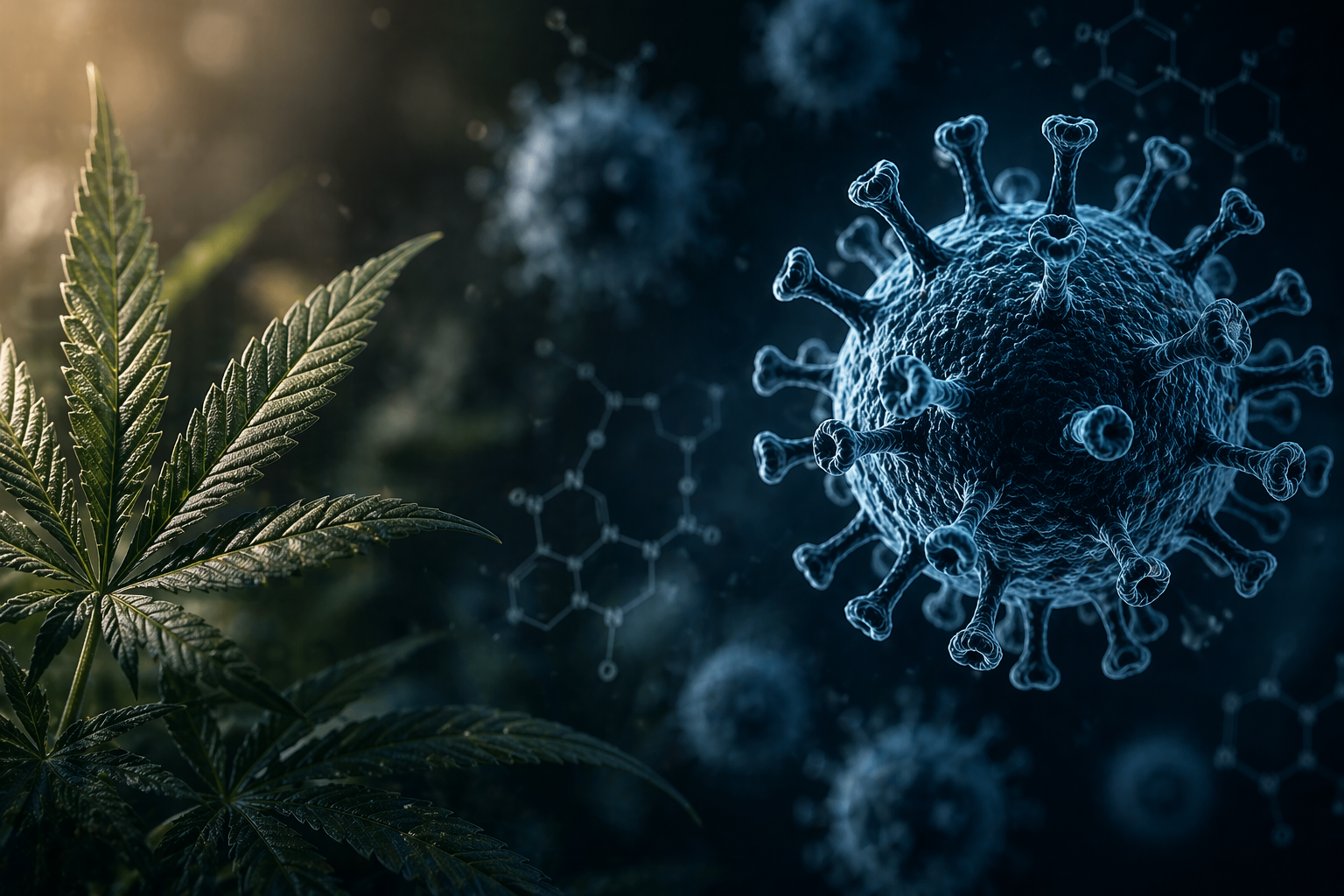
A recent study by researchers from UCLA Health and Israeli scientists highlights the potential antiviral properties of terpenes and CBD. While cannabis-related compounds are often associated with wellness trends, this research attempts to evaluate them in a much more clinical context — specifically, their interaction with respiratory viruses like SARS-CoV-2 and influenza A.
Terpenes are aromatic compounds found across the plant kingdom, including cannabis. They are responsible for distinctive scents such as citrus, pine, and lavender, but in recent years researchers have begun to explore their biological activity beyond aroma. CBD (cannabidiol), meanwhile, is a non-intoxicating cannabinoid that has been widely studied for its anti-inflammatory and regulatory effects on the body.
What the Study Actually Found
In controlled laboratory conditions, researchers observed that certain terpene formulations interfered with viral entry into human lung cells. This is a critical early stage in infection — if a virus cannot enter a cell, it cannot replicate.
At the same time, both terpenes and CBD demonstrated anti-inflammatory properties. This is particularly relevant in the context of respiratory infections, where excessive immune responses — often referred to as cytokine storms — can contribute significantly to disease severity.
Notably, the study found that combining CBD with terpenes appeared to amplify these anti-inflammatory effects, suggesting a possible synergistic interaction between the compounds.
Important Context: Lab Results vs. Real-World Use
Despite promising signals, it is essential to understand the limitations.
The findings come from preclinical research, meaning they were observed in lab environments, not in human clinical trials. This distinction is critical. Many compounds show antiviral or anti-inflammatory activity in vitro but fail to produce meaningful results in real-world medical settings.
The research, published in the peer-reviewed journal Biotechnology Reports, provides a foundation for further investigation — not a validated treatment pathway.
Why This Still Matters
Even with these limitations, the study contributes to a broader scientific trend: the exploration of plant-derived compounds as supportive tools in managing complex diseases.
If future clinical trials confirm these findings, terpene-based formulations or CBD combinations could potentially be used as complementary therapies — not replacements — alongside established treatments such as vaccines or antiviral drugs.
This is particularly relevant in regions where access to advanced healthcare remains limited, although that application remains speculative at this stage.
What Consumers Should Take From This
For now, the takeaway is not to treat CBD or terpene products as antiviral solutions.
Instead, this research highlights potential mechanisms that warrant further study. Anyone considering CBD products for health-related purposes should approach them as wellness supplements and consult medical professionals, especially when dealing with respiratory conditions or infections.
Final Perspective
Studies like this illustrate how early-stage research can open new directions without immediately translating into practical use. Terpenes and CBD are biologically active compounds with real effects on the body — but understanding how those effects translate into clinical outcomes is a much longer process.
For now, this is a promising signal — not a medical breakthrough.


I have smoked cannabis since I was 16 on off till in late twenty’s from then on I have smoke it most days of my life. I am now a young 59 I only had one Covid vaccine i never had already bad chest infection so maybe cannabis has done my heath good Nobody as ever died or overdosed on any cannabis It would t have all the side affects Made made Medicean has a lot more cheaper too
Bueno muy interesante y bueno pero en mi país con todos o su gran mayoría no profesionales y a favor del comunismo creer que apoyaran o se logre pars ellos una persona que fume será una criminal aunque la ciencia diga lo contrario … Las fuerzas de seguridad los jefes serán tan preparos con estudios para darse cuenta o estudiar que esto es bueno y real se dejan llevar por yo como tu no y suerte ve a ver cómo sobrevives …
Which terpenes are they seeing!?
Where can someone get this to ???
Where can someone get this to I’m in Canada.
It only lasted 3 days of sleep, smoking made the world a little active the whole time.
I’ve been smoking for 50+ yrs on & off I did get covid went to ER the doctor ran a CAT scan on my lungs after he found out I was smoking marijuana. He came back in and he said wow yeah you’ve got Covid that’s where fever comes from but I’m sending you home. You have a little bit of bronchitis in the bottom of one of your lungs, but your lungs are crystal clear ! And how long did you say you’ve been smoking marijuana 53 yrs he said Wow I can not believe this! 😎