
Trump Removes Cannabis From Schedule I in Historic Executive Order
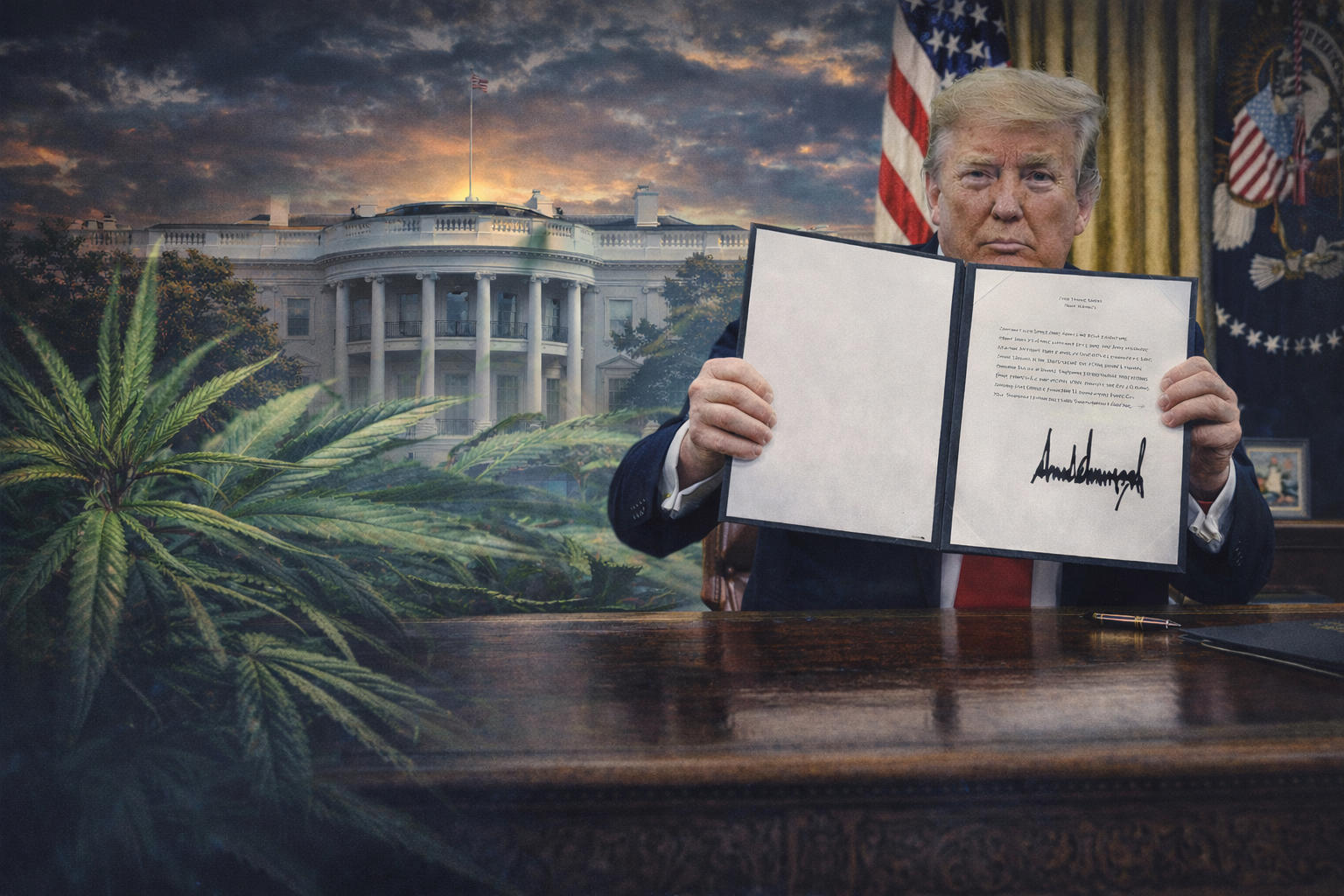
President Donald Trump has signed an executive order formally directing federal agencies to remove cannabis from Schedule I of the Controlled Substances Act, initiating the final phase of a long-awaited rescheduling process.
The order instructs the U.S. Attorney General to expedite and complete the reclassification of cannabis, widely expected to move the plant to Schedule III. While the action does not legalize cannabis federally, it marks the most significant shift in U.S. cannabis policy at the federal level in decades.
What the Executive Order Does
According to the White House and reporting obtained ahead of the signing, the executive order:
-
Directs the Attorney General to complete the rescheduling of cannabis, removing it from Schedule I
-
Formally acknowledges that cannabis has accepted medical use under federal standards
-
Frames the reform as a research- and patient-focused policy change, not legalization
Schedule I is reserved for substances deemed to have no accepted medical use and a high potential for abuse. Removing cannabis from this category fundamentally changes how federal law treats the plant.
Why This Is a Major Shift
For decades, marijuana’s Schedule I status severely restricted research, medical guidance, and regulatory clarity. Federal officials have long acknowledged that the classification was increasingly out of step with scientific evidence and real-world use.
Rescheduling cannabis to Schedule III is expected to:
-
Dramatically reduce barriers to medical and scientific research
-
Allow cannabis businesses to eventually access normal federal tax deductions under IRS code 280E
-
Improve the development of evidence-based medical guidelines
-
Align federal policy more closely with state-level medical cannabis programs
Importantly, rescheduling does not override state laws or legalize adult-use cannabis nationwide.
CBD, Hemp, and Research Provisions
The executive order also places strong emphasis on CBD and hemp-derived products, directing federal agencies to:
-
Expand and modernize research methods using real-world evidence
-
Improve standards of care for medical cannabis and CBD use
-
Work with Congress to ensure patient access to full-spectrum CBD products, while restricting products that pose serious health risks
In parallel with the order, the Centers for Medicare & Medicaid Services (CMS) announced a new model that will allow certain Medicare beneficiaries to receive doctor-recommended hemp-derived CBD at no cost, provided products meet strict safety and testing requirements.
What This Does Not Do
Despite widespread confusion, the executive order does not:
-
Legalize marijuana federally
-
Mandate nationwide cannabis sales
-
Eliminate federal enforcement overnight
-
Resolve banking or criminal justice reform on its own
Those changes would still require congressional action.
Why the Administration Says This Matters
Federal health officials have repeatedly stated that millions of Americans already use cannabis and CBD for medical purposes — often without clear guidance.
By removing marijuana from Schedule I, the administration argues it can finally support research that answers critical questions about:
-
What conditions may cannabis help
-
Proper dosing and formulations
-
Long-term risks, including addiction
-
How to minimize harm while maximizing therapeutic benefit
As National Institute on Drug Abuse Director Nora Volkow has emphasized, rescheduling allows the government to study cannabis seriously — not endorse it, but understand it.
The Bottom Line
Trump’s executive order does not end federal cannabis prohibition — but it ends marijuana’s status as a substance with “no medical value” under U.S. law.
That shift alone reshapes the legal, medical, and research landscape. For patients, scientists, and parts of the cannabis and hemp industries, it marks a decisive move away from prohibition-driven policy and toward evidence-based regulation.
If you want to get more information about the topic, have a look at our three-part series about the rescheduling:
-
Part 2: How Rescheduling Could Affect Consumers, Patients, and Businesses
-
Part 3: The Risks, Unknowns, and What Still Needs Regulation





Great 👍 👌 Protect those who need weed…
So does anyone know about this?
It doesn’t legalize cannabis but it De-schedule it?
Doesn’t that mean it can be bought over the counter with age restrictions to protect the children like Sudafed and cigarettes.
What about hemp, CBD, thca, THC, exct
Does those all get rescheduled also?
But it’s not legal…??