Texas Smokable THC Ban Explained: THCA Crackdown & Market Impact
Key Takeaways
- Texas has effectively banned the sale of smokable hemp products as of March 31, 2026
- The move targets THCA-rich flower, a major segment of the legal hemp market
- Possession remains legal, but sales restrictions could push demand into gray and illicit markets
- Consumers are expected to bypass the ban through interstate purchases and online shipping
- Industry experts warn that the policy may revive unregulated supply chains rather than eliminate access
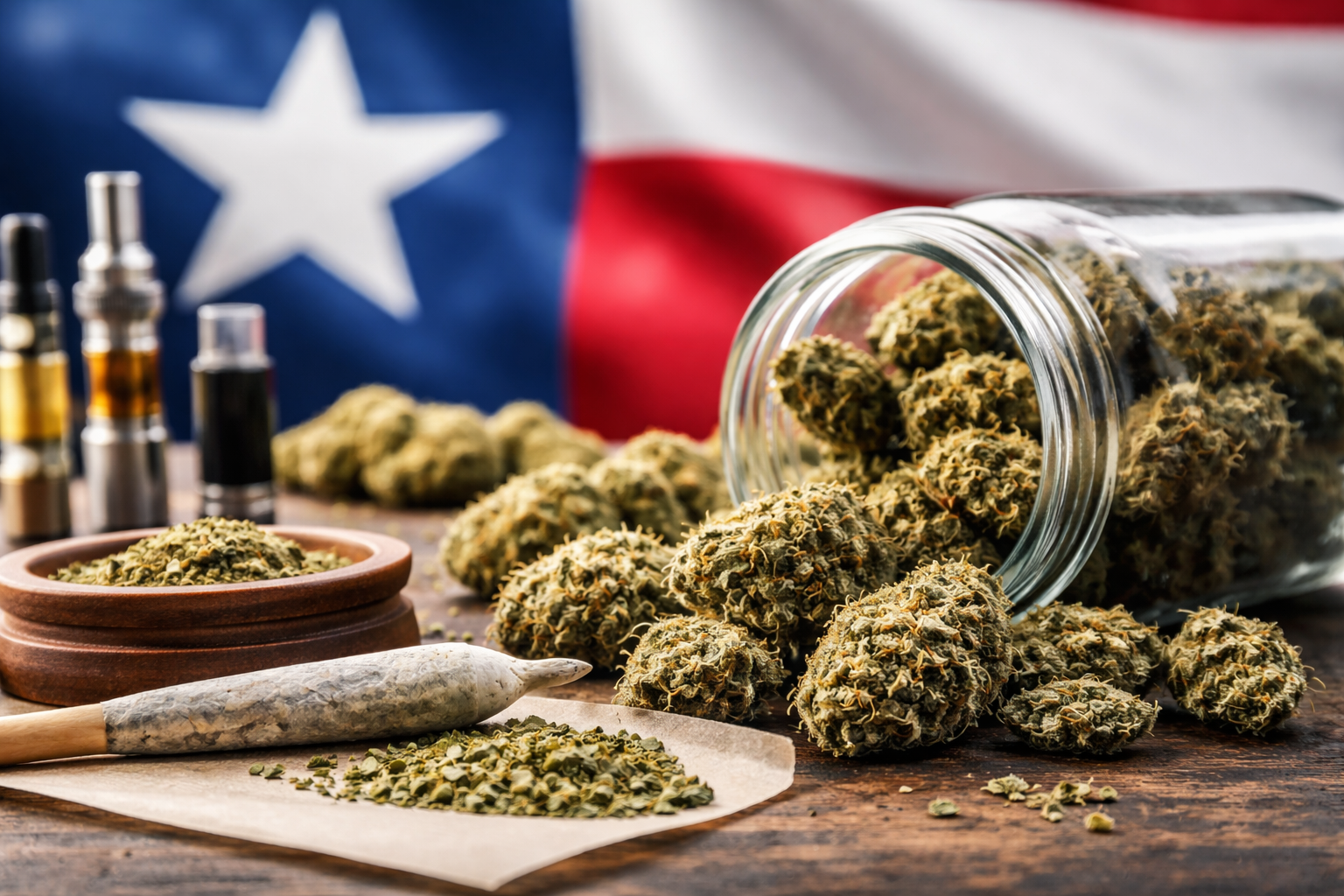
Texas has entered a new phase of cannabis regulation, effectively banning the sale of smokable hemp products under newly implemented rules from the Texas Department of State Health Services.
The policy shift marks the most significant tightening of hemp regulations since Governor Greg Abbott vetoed a broader THC ban in 2025. Instead of an outright prohibition, regulators have opted for a targeted approach — one that directly impacts hemp flower and other inhalable cannabinoid products.
At the center of the crackdown is THCA, the non-intoxicating precursor to THC that converts into psychoactive compounds when heated. By restricting THCA concentrations, regulators have effectively sidelined smokable hemp — one of the most popular product categories in the state.
A Major Hit to Texas’ Hemp Economy
Hemp flower is estimated to account for 25% to 40% of the legal hemp market in Texas, making this regulatory shift a direct blow to retailers — particularly smaller, independent operators.
Many business owners warn that the new rules could wipe out their core product lines overnight. Unlike edibles, tinctures, or the rapidly growing THC beverage category — which remains untouched — smokable products now sit in a regulatory dead zone.
The result: a fragmented market where certain cannabis-derived products remain legal, while others are pushed out based on form rather than effect.
The Predictable Outcome: A Shift, Not a Disappearance
Despite the intent to tighten control, industry experts argue the policy will not eliminate access — only redirect it.
“There’s always going to be supply where there’s demand,” said Heather Fazio of the Texas Cannabis Policy Center — a sentiment widely echoed across the industry.
Consumers already have multiple workarounds:
- Cross-border purchases from states like New Mexico and Oklahoma
- Online orders shipped from out-of-state vendors operating in legal gray zones
- Unregulated local markets stepping in to fill the gap
In practice, the ban targets regulated storefronts, not the underlying demand — a dynamic that historically fuels illicit market growth.
Legal Contradictions and Enforcement Challenges
The situation is further complicated by a key inconsistency:
- Selling smokable hemp is illegal
- Possessing it is not
This creates a regulatory paradox where consumers can legally hold a product they cannot legally purchase within the state.
Enforcement adds another layer of complexity. Texas recorded over 26,000 marijuana-related arrests in 2024, but authorities have not outlined a clear strategy for policing the anticipated rise in gray-market activity.
Additionally, interstate enforcement remains legally murky. While Texas has frameworks to regulate alcohol crossing state lines, similar systems for cannabis products are largely undeveloped. Some states — like Colorado — have even introduced shield laws to protect their hemp businesses from out-of-state enforcement actions.
A Familiar Pattern in Cannabis Policy
Texas’s move reflects a broader pattern seen across restrictive cannabis markets:
Regulations aimed at limiting access often end up reshaping distribution channels rather than reducing consumption.
By removing regulated options, policymakers risk pushing consumers toward:
- Unverified products
- Unregulated suppliers
- Increased safety risks
Meanwhile, legal operators — who comply with testing, labeling, and safety standards — bear the brunt of the crackdown.
What Comes Next
The Texas Department of State Health Services has signaled increased enforcement, funded by higher licensing fees — up to $5,000 annually for retailers and $10,000 for manufacturers.
However, whether stricter oversight can meaningfully control a market that is already adapting remains uncertain.
If anything, Texas may be entering a new phase of cannabis regulation — one where the legal market contracts, but overall access remains largely unchanged.
Are There Legal Consequences for Consumers
For consumers, the situation is more nuanced than a typical “ban.”
Under the new rules introduced by the Texas Department of State Health Services, the primary target is the sale and manufacturing of smokable hemp products — not possession.
That distinction is critical.
At this stage, individual consumers are not being criminalized simply for possessing hemp flower, even if those products are no longer legally sold within Texas. In practical terms, this creates a legal gray zone where:
- Buying smokable hemp in Texas is restricted
- Owning or using it may still be legal
- Enforcement focuses on businesses rather than individuals
However, this does not mean consumers are entirely risk-free.
Bottom Line
Texas hasn’t eliminated smokable hemp — it has simply pushed it out of the regulated system.
And as history continues to show, when legal access disappears, alternative markets don’t hesitate to take its place.