The Ultimate Guide to Cannabinoids How Cannabis Really Works
Key Takeaways
- Cannabinoids are the active compounds that drive cannabis effects
- THC and CBD dominate but are only part of the picture
- Minor cannabinoids significantly influence the experience
- The entourage effect explains why full-spectrum products feel different
- Understanding labels allows you to estimate real potency
- Cannabinoids matter more than indica vs sativa
Cannabis is often simplified to one idea: THC gets you high, CBD calms you down.
But that’s only a fraction of the full picture.
Cannabis contains over 100 identified cannabinoids. Cannabinoids active compounds that interact directly with the human body and shape everything from mood and perception to sleep and inflammation. While THC and CBD dominate the conversation, a growing body of research and real-world experience shows that minor cannabinoids play a crucial role in how cannabis actually feels.
If you want to understand cannabis beyond basic labels and make smarter decisions as a consumer, cannabinoids are where you need to focus.
In this guide, we break down the most important cannabinoids, how they work, and how to actually use this knowledge when choosing cannabis.
What Are Cannabinoids
Cannabinoids are naturally occurring compounds produced in the trichomes of the cannabis plant, the tiny resin glands that cover the flower.
They interact with the body’s endocannabinoid system (ECS), a regulatory network responsible for maintaining balance across key functions like:
- Mood
- Sleep
- Appetite
- Pain perception
- Immune response
Each cannabinoid interacts differently with this system, which is why cannabis effects can vary so widely depending on composition.
THC: The Primary Psychoactive Cannabinoid
THC (tetrahydrocannabinol) is the compound most responsible for the psychoactive effects of cannabis. It binds directly to CB1 receptors in the brain, which leads to the classic “high” associated with cannabis use.
In low to moderate doses, THC can produce euphoria, relaxation, enhanced sensory perception, and increased appetite. However, higher doses can also lead to anxiety, paranoia, or mental fog, especially for inexperienced users.
Modern cannabis is significantly more potent than it was decades ago. While older strains often contained under 10% THC, today’s products commonly range between 15% and 30%, with concentrates going even higher. This makes understanding dosage more important than ever.
THC is also highly versatile. Depending on the terpene profile and cannabinoid balance, it can feel energizing, calming, creative, or sedating. This is why simply labeling a strain as indica or sativa does not reliably predict how THC will affect you.
Another important factor is how THC is metabolized. When smoked or vaporized, THC enters the bloodstream quickly and produces fast effects. When consumed as an edible, it is converted in the liver into 11-hydroxy-THC, a compound that is stronger and longer-lasting. This is why edibles often feel more intense.
For a full breakdown of THC, its effects, and safe dosing, refer to our dedicated THC guide.
CBD: The Balancing Cannabinoid
CBD (cannabidiol) is the second most well-known cannabinoid, but its role is very different from THC.
CBD does not produce a psychoactive high. Instead, it interacts more indirectly with the endocannabinoid system and other receptor systems in the body. This gives it a stabilizing and modulating effect.
One of CBD’s most important roles is its ability to influence how THC behaves. It can reduce some of the negative side effects of THC, such as anxiety or paranoia, and create a more balanced experience overall.
CBD is widely associated with calming effects, reduced inflammation, and general relaxation. This makes it popular for both medical and wellness applications, even outside traditional cannabis use.
Another key advantage of CBD is its accessibility. In many regions, CBD products are legal even when THC is restricted, which has contributed to its rapid rise in popularity.
However, not all CBD products are equal. Full-spectrum CBD products that include other cannabinoids often produce stronger and more noticeable effects due to the entourage effect.
If you want to go deeper into how CBD works and how it compares directly to THC, check our CBD guide and THC vs CBD comparison article.
CBG: The Mother Cannabinoid
CBG (cannabigerol) is often referred to as the “mother cannabinoid” because it is the precursor from which other cannabinoids are synthesized.
In the early stages of plant development, cannabis produces CBGA (cannabigerolic acid). As the plant matures, enzymes convert CBGA into THCA, CBDA, and other cannabinoid acids. This is why most mature plants contain only small amounts of CBG.
Despite its low concentration, CBG is gaining attention for its unique effects. Many users report a clear-headed, focused experience that differs from both THC and CBD. It is often described as functional and mentally stimulating without being overwhelming.
Early research suggests that CBG may have anti-inflammatory and neuroprotective properties, although more studies are needed to confirm these effects.
From a consumer perspective, CBG-rich products are becoming more common, especially in products marketed for daytime use, focus, or productivity.
Because of its rarity, CBG products are often more expensive, but they represent one of the most interesting developments in modern cannabis.
CBN: The Sleep Associated Cannabinoid
CBN (cannabinol) is formed when THC degrades over time, typically through exposure to heat, light, and oxygen.
This is why older cannabis tends to contain higher levels of CBN.
CBN is often associated with sedative effects, which made it popular in sleep-focused products. Many users report that it helps promote relaxation and supports deeper sleep, especially when combined with THC.
However, it’s important to understand that CBN on its own is only mildly psychoactive. Its reputation as a “sleep cannabinoid” likely comes from its interaction with other compounds, particularly THC.
In other words, CBN is not a magic sleep solution, but as part of a broader cannabinoid profile, it can contribute to more sedating effects.
Today, many brands are isolating and concentrating CBN specifically for nighttime formulations, often combining it with CBD and melatonin.
CBC: The Underrated Cannabinoid
CBC (cannabichromene) is one of the lesser-known cannabinoids, but it plays an important role in the overall cannabis experience.
Unlike THC, CBC does not bind strongly to CB1 receptors, meaning it does not produce a high. Instead, it interacts with other receptor systems in the body, including those linked to pain and inflammation.
Early research suggests that CBC may have anti-inflammatory and mood-supporting properties. It may also contribute to neurogenesis, although this area is still being explored.
What makes CBC particularly interesting is its role in the entourage effect. Even in small amounts, it can influence how other cannabinoids behave and enhance the overall experience.
Because it is rarely isolated, most people consume CBC as part of full-spectrum cannabis products without even realizing it.
THCV: The Energy Linked Cannabinoid
THCV (tetrahydrocannabivarin) is structurally similar to THC but produces very different effects.
In low doses, THCV is often described as energizing, clear-headed, and stimulating. Some users report increased focus and reduced mental fog, making it appealing for daytime use.
Another interesting aspect of THCV is its potential appetite-suppressing effects, which contrasts with THC’s well-known appetite stimulation.
At higher doses, THCV can produce mild psychoactive effects, but these are typically shorter in duration and more controlled compared to THC.
THCV is naturally found in certain African and Asian landrace strains, but modern breeding is increasing its availability.
As the industry moves toward more targeted cannabinoid profiles, THCV is likely to become a key player in “functional cannabis” products.
The Entourage Effect: Why Cannabinoids Work Together
Cannabinoids rarely act alone.
The entourage effect describes how cannabinoids and terpenes interact synergistically to shape the overall experience. This is why full-spectrum cannabis products often feel more complex and balanced than isolated compounds.
For example:
- THC combined with CBD may feel smoother and less anxious
- Terpenes can amplify or soften certain effects
- Minor cannabinoids can subtly shift the overall experience
This is also why two products with the same THC percentage can feel completely different.
How to Read Cannabis Labels Properly
Understanding cannabinoids becomes practical when you can read a product label correctly.
Most legal cannabis products list cannabinoid content as a percentage.
Converting Percentage Into Milligrams
Let’s break it down with a simple example:
If you buy 5 grams of cannabis at 10% THC:
- 1 gram = 1000 mg
- 10% of 1000 mg = 100 mg THC per gram
- 5 grams = 500 mg total THC
So in total, that product contains approximately 500 mg of THC.
However, this does NOT mean you will consume 500 mg.
What You Actually Consume
The amount of THC your body absorbs depends on:
- Consumption method
- Combustion or vaporization efficiency
- Individual metabolism
For example:
- Smoking or vaping typically delivers only a portion of the total cannabinoids
- Edibles can convert THC into a more potent form (11-hydroxy-THC)
- You lose some cannabinoids during combustion
This is why two people can consume the same product and have very different experiences.
What to Look For on Labels
- THC percentage for potency
- CBD percentage for balance
- Minor cannabinoids for nuance
- Total cannabinoid content, if available
As the market matures, more products will highlight full cannabinoid profiles rather than just THC.
Why Cannabinoids Matter More Than Strain Names
This ties directly back to the indica vs sativa discussion.
Strain labels are broad and often inconsistent. Cannabinoid profiles, on the other hand, are measurable and reliable.
Two “indica” strains can produce completely different effects if their cannabinoid composition differs.
If you want consistency and control, cannabinoids (not strain names) should guide your decisions.
Conclusion
Cannabinoids are the foundation of cannabis.
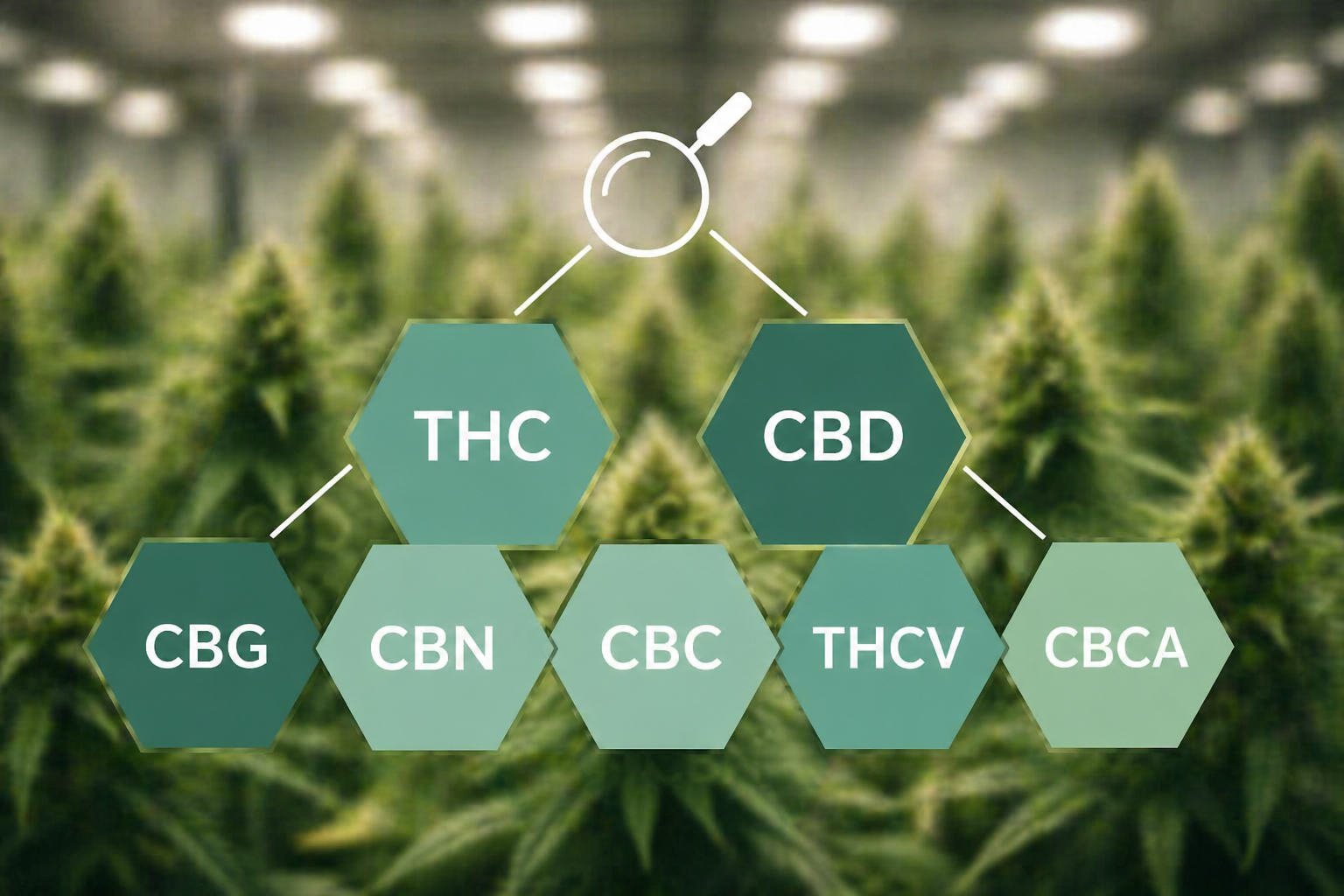
THC and CBD are only the beginning. Minor cannabinoids like CBG, CBN, CBC, and THCV add layers of complexity that shape the real-world experience.
As cannabis continues to evolve, the industry is moving away from simple labels and toward precise chemical profiles.
Understanding cannabinoids puts you ahead of that curve and gives you the ability to choose cannabis based on how it actually works, not just how brands market their products.