
New Lab Study Finds Cannabis Compounds Kill Ovarian Cancer Cells — Without Harming Healthy Cells
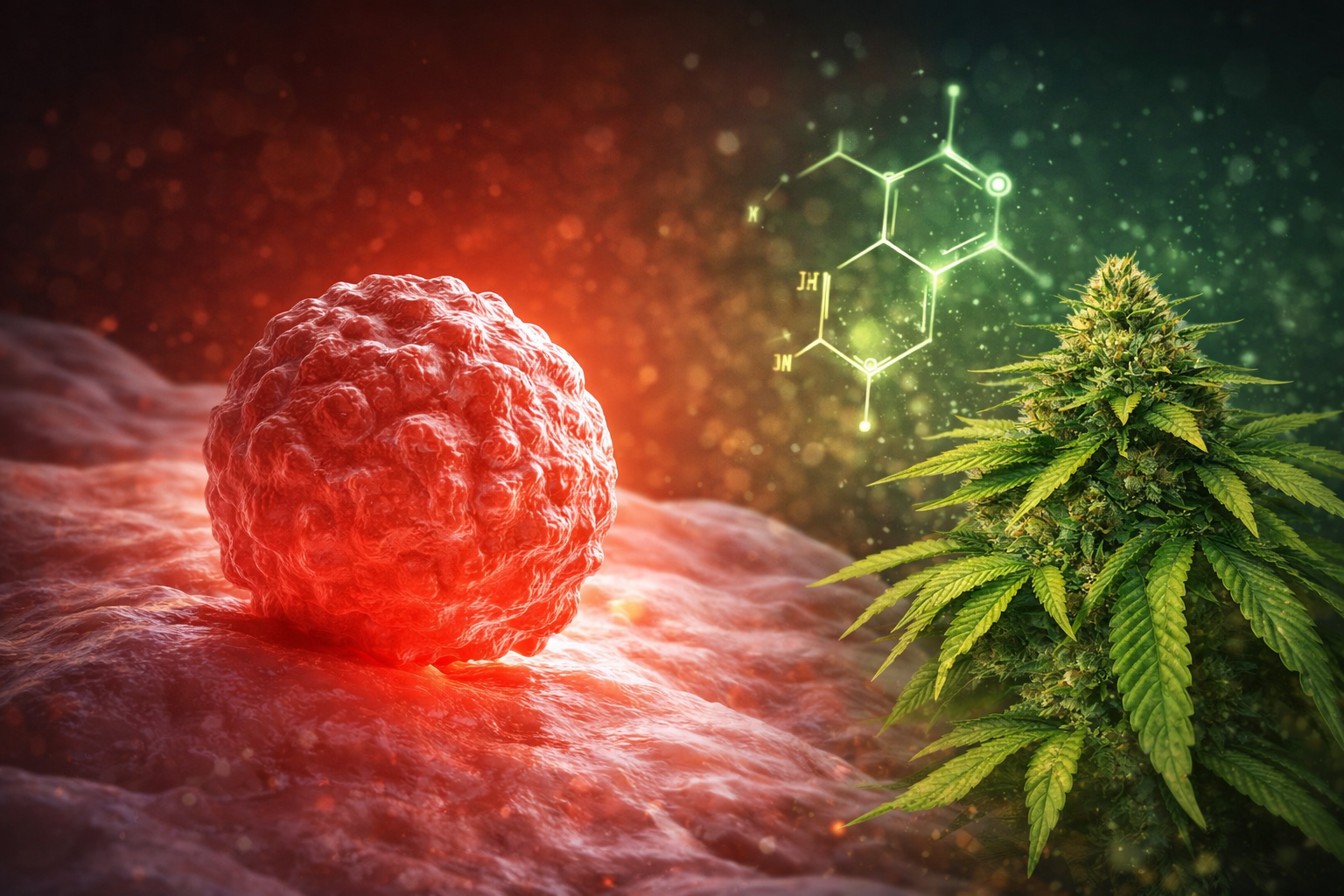
A new peer-reviewed laboratory study has found that a combination of cannabis-derived compounds can selectively kill ovarian cancer cells while largely sparing healthy ovarian cells — a promising result that adds to a growing body of early-stage cannabis oncology research.
The findings, published in Frontiers in Pharmacology, examined how CBD (cannabidiol) and THC (tetrahydrocannabinol) affect human ovarian cancer cell lines in controlled laboratory conditions. While the results are not evidence of a cancer treatment for patients, researchers say the data warrants further investigation.
What the Study Looked At
The research team tested CBD and THC — both individually and in combination — on multiple human ovarian cancer cell lines, as well as on healthy ovarian epithelial cells.
Key observations included:
-
Significant reduction in cancer cell growth and survival, particularly when CBD and THC were used together
-
Increased apoptosis (programmed cell death) in cancer cells
-
Minimal toxicity to healthy ovarian cells, suggesting a potential therapeutic window
-
Reduced cancer cell migration and invasion, both of which are linked to metastasis
Notably, the combination of CBD and THC consistently outperformed either compound alone, supporting the idea that cannabinoids work synergistically rather than as isolated agents (entourage effect).
How It Works (In Simple Terms)
The researchers identified changes in the PI3K/AKT/mTOR signaling pathway, a molecular system that plays a major role in cell growth, survival, and cancer progression.
Disruption of this pathway is a common target in modern oncology, and the study suggests that cannabinoids may interfere with it while also increasing PTEN activity, a tumor-suppressor protein often diminished in aggressive cancers.
In short: the cannabinoids appeared to push cancer cells toward self-destruction while leaving healthy cells largely unaffected — at least in a petri dish.
Important Reality Check: This Is Early-Stage Research
While headlines about cannabis “killing cancer cells” tend to spread quickly, the authors themselves are clear about the limitations.
This study was conducted in vitro, meaning:
-
The experiments were done on isolated cells, not in animals or humans
-
The results do not demonstrate clinical effectiveness
-
Dosage, metabolism, delivery methods, and long-term safety are still unknown
Many compounds that look promising in cell cultures never make it through animal studies or human trials. That does not make the findings meaningless — but it does mean they should be interpreted responsibly.
Why This Matters in Ovarian Cancer Research
Ovarian cancer remains one of the deadliest gynecological cancers, largely because it is often diagnosed late and frequently develops resistance to chemotherapy.
As a result, researchers are actively exploring:
-
New molecular targets
-
Combination therapies
-
Compounds that can selectively harm cancer cells without damaging healthy tissue
Cannabinoids have already shown anti-tumor activity in preclinical models of other cancers, including breast, prostate, brain, and colorectal cancer. This study adds ovarian cancer to that growing list — cautiously, but credibly.
Where Policy Quietly Enters the Picture
One reason cannabis research moves slowly is not scientific skepticism alone, but regulatory friction.
In the United States, cannabis remains classified as a Schedule I substance at the federal level — a category reserved for drugs deemed to have no accepted medical use. This classification creates additional barriers for researchers, including:
-
Limited access to standardized cannabis materials
-
Increased administrative and legal hurdles
-
Higher costs and longer approval timelines
Rescheduling cannabis would not legalize it federally, nor would it turn cannabinoids into approved cancer treatments overnight. What it would do is make basic and applied medical research significantly easier, allowing scientists to explore promising findings like these without unnecessary obstacles.
The Bottom Line
This study does not show that cannabis cures ovarian cancer. It does show that certain cannabis compounds can selectively kill ovarian cancer cells under laboratory conditions — a meaningful signal that justifies further research.
Whether those signals ever translate into real-world treatments depends on years of follow-up studies, animal models, clinical trials, and regulatory clarity.
For now, the takeaway is simple:
Cannabis research continues to produce intriguing early data — and science moves faster when researchers are allowed to follow the evidence.







Knew it for 50+ years.