Is Cannabis Really Making People Vomit? Why Every News Outlet Suddenly Says Yes
Key Takeaways
-
A simultaneous wave of “scromiting” articles across mainstream outlets was triggered by a single CNN wire story, which was syndicated nationwide and then amplified by TikTok testimonials and follow-up coverage from USA Today, Vice, The New York Post, Discover Magazine, Axios, and others.
-
Cannabinoid Hyperemesis Syndrome (CHS) is real but extremely rare, affecting an estimated 0.084%–0.12% of cannabis consumers, almost exclusively long-term daily or near-daily heavy users.
-
Despite the panic framing, the medical evidence shows CHS remains a very small fraction of ER visits, and the rise seen in the data reflects improved recognition and the new CHS diagnostic code — not a sudden national health crisis.
-
The timing of the scromiting narrative aligns with political and economic tensions including declining alcohol sales, the Farm Bill hemp crackdown, and ongoing cultural battles around cannabis, making the panic especially convenient for anti-cannabis interests.
-
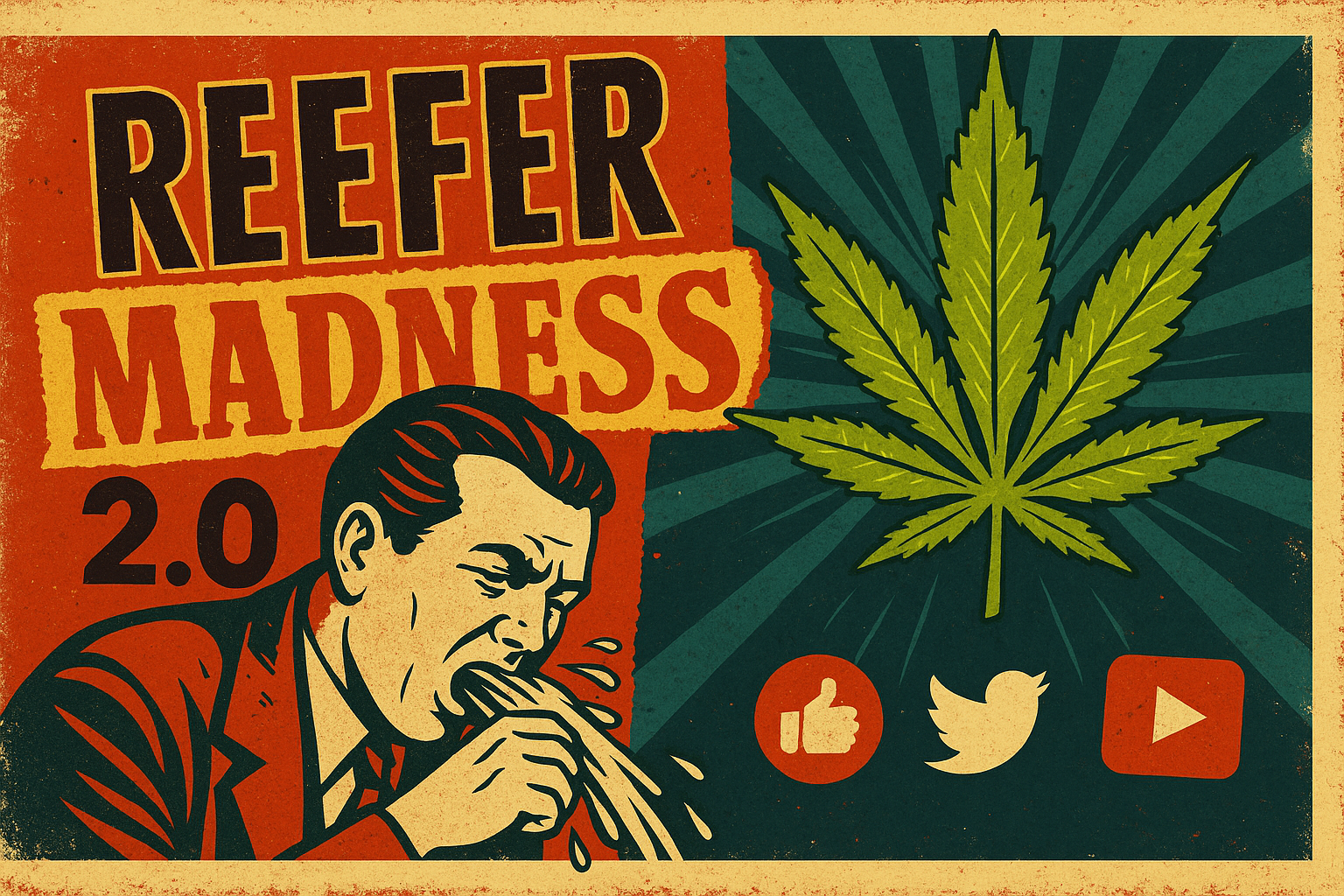
The surge in headlines represents a modern Reefer Madness moment, driven by algorithms, virality, and media incentives — not by a meaningful public-health threat to typical cannabis consumers.
Over the past week, mainstream media has rediscovered a new cannabis horror story: “scromiting” — a slang term combining screaming and vomiting. According to the headlines, legal weed is causing people to end up in emergency rooms across America, suffering from a dramatic vomiting condition linked to long-term cannabis use.
CNN started the madness, and USA Today, The New York Post, Vice, Discover Magazine, Axios, People Magazine, The Independent, Fox News, and dozens of regional TV stations have all pushed the story at the exact same time. TikTok is full of emotional CHS stories. Facebook is overrun with Reefer Madness-style warnings.
But here’s what almost none of them explain:
Cannabinoid Hyperemesis Syndrome (CHS) is real — but extremely rare.
And the timing of this media wave is not an accident.
This article breaks down:
-
Who is pushing the “scromiting” narrative
-
What CHS actually is
-
How common CHS truly is (with realistic numbers)
-
A timeline showing how this panic erupted
-
Why the media suddenly cares — and whose interests align with the fear
-
The real harm-reduction facts consumers deserve
Let’s go step by step.
1. The Mainstream Outlets Behind the Scromiting Panic
Here are the key publications driving the viral explosion, along with the themes they promoted.
CNN (and hundreds of local stations via CNN Newsource)
-
Articles warning that chronic cannabis use can trigger “scromiting,” affecting younger adults.
-
The CNN wire story was automatically republished across dozens of local TV websites, creating the illusion of a nationwide surge of independent reporting.
- On Dec 6, Sandee LaMotee published an article for CNN with the headline: ‘Scromiting,’ a bizarre condition linked to chronic marijuana use, is on the rise
USA Today
-
“What Is Scromiting?” explainer with sensational descriptors about legal weed causing ER spikes.
(Dec 8, 2025)
New York Post
-
Multiple stories in under a week, including claims that scromiting is “plaguing ERs” and “worse than childbirth.”
-
Heavy focus on dramatic personal anecdotes.
Vice
- Naturally, Vice couldn’t resist. When your ship is going down, you grab any click you can. Their December 6th masterpiece? A bargain-bin rewrite of CNN’s story.
Discover Magazine
-
Science-sounding coverage referencing CNN’s report and new CHS studies.
Axios & People Magazine
-
Highlighting WHO’s new diagnostic code and emotional TikTok testimonials.
The Independent, NDTV, Hindustan Times
-
International outlets are amplifying American panic headlines globally.
The messaging is nearly identical across all outlets:
“Legal weed has caused a new, terrifying disorder.”
But let’s look at the actual science.
2. What CHS Actually Is (Without the Hype)
Cannabis Hyperemesis Syndrome (CHS) is a well-documented but still not fully understood condition found almost exclusively in:
-
Long-term, daily or near-daily users
-
Often, those who consume high-THC flower or concentrates
-
People have been using it heavily for years, not months
Symptoms appear in cycles:
-
Severe nausea
-
Vomiting
-
Stomach pain
-
Temporary relief from compulsive hot showers
-
Symptoms disappear when cannabis is discontinued
CHS is real.
But what the media ignores is how uncommon it is.
3. How Rare Is CHS? Realistic Numbers (Not Fear-Based Headlines)
Most peer-reviewed studies estimate that CHS affects:
0.1% to 0.5% of all cannabis consumers
(Some clinicians believe the real rate may be on the lower end.)
Among heavy, long-term daily users, the rate appears to be around:
0.7% to 1.0%
These are the numbers that matter — not the clickbait.
To make this practical, let’s use your model:
CHS Prevalence Model (1,000,000 Cannabis Consumers)
Step 1 — Heavy users (~12% of consumers)
-
1,000,000 total users
-
120,000 daily/heavy users
Step 2 — CHS rate among heavy users (0.7–1.0%)
-
0.7% → 840 cases
-
1.0% → 1,200 cases
Final breakdown
| Group | Estimated Number | % of Total | CHS Cases |
|---|---|---|---|
| All Cannabis Users | 1,000,000 | 100% | — |
| Heavy/Daily Users | 120,000 | 12% | 840–1,200 |
| Total CHS Patients | 840–1,200 | 0.084–0.12% | — |
Interpretation
If you have 1,000,000 cannabis users, between 99.88% and 99.916% will never develop CHS.
Compare that to the media panic.
The coverage implies the opposite.
This disconnect is the heart of the story.
4. The Timeline: How the Scromiting Panic Started
To understand why every outlet suddenly published CHS articles at the same time, we need to look at the exact sequence of events.
OCTOBER 1, 2025 — WHO/CDC introduces a new CHS diagnostic code
Hospitals can now officially classify CHS as ICD-10 code R11.16.
This created a future media hook — but coverage did not immediately explode.
LATE NOVEMBER — A major ER study drops in JAMA Network Open
The study analyzed U.S. emergency department data from 2016 to 2022 and found that CHS-coded visits, while extremely rare overall, increased progressively over the seven years — especially among adults aged 18–35. Most CHS-related ER cases involved long-term daily or near-daily cannabis users, with concentrates and high-THC products often mentioned in clinical notes. Importantly, even with the documented rise, CHS still represented a tiny fraction of total cannabis-related ER visits and an even smaller fraction of all emergency department traffic nationwide.
Still, no media frenzy.
DECEMBER 3–4 — CNN Newsource publishes a wire article about scromiting
As already mentioned before, THIS is the trigger.
-
CNN issues a national story
-
Hundreds of local TV stations auto-publish it
-
Social feeds fill with identical headlines
-
It appears as if a national crisis has erupted overnight
This is the spark that ignites everything.
DECEMBER 5–7 — TikTok + Instagram push emotional CHS content
Viral testimonials gain traction.
The word “scromiting” becomes a trending keyword.
DECEMBER 7–9 — Major outlets pile on
USA Today, Discover Magazine, People Magazine, Vice, Axios, and The New York Post all publish their own stories, citing:
-
CNN
-
The JAMA study
-
Each other
The panic becomes self-reinforcing.
DECEMBER 9+ — Global amplification
UK and Indian news sites follow, referencing American outlets.
The story becomes international.
This is how Reefer Madness 2.0 spreads in the modern media ecosystem.
5. Is Someone Behind This Panic? (A Realistic Analysis)
Let’s be precise and professional:
There is currently no evidence that any specific industry is paying for this wave of scromiting coverage.
However, three realities matter:
1. Media incentives reward fear
Gross, shocking, or sensational content performs exceptionally well.
The term “scromiting” itself is engineered for virality.
2. The timing aligns with major political and economic battles
-
Alcohol sales are declining
-
Cannabis sales are rising
-
The Farm Bill hemp fight is intensifying
-
Anti-cannabis lobbying groups want to instill public fear
-
Conservative media needs anti-weed narratives and this topic brings them a lot of clicks & engagement
All of these groups benefit from a public perception that cannabis is dangerous.
3. No coordinated funding needed
The system works like this:
-
A medical code
-
A national study
-
A CNN wire story
-
TikTok virality
-
Media copy-paste behavior
= a national panic that amplifies itself without anyone needing to spend a dollar.
The alignment of incentives creates the outcome automatically.
6. The Truth Consumers Deserve (Harm Reduction)
Here’s the grounded reality:
Who is actually at risk?
-
Long-term daily users
-
Mostly heavy flower or high-THC concentrate consumers
-
Usually, after years of consumption, not months
Warning signs
If someone repeatedly experiences:
-
Severe vomiting
-
Abdominal pain
-
Relief from very hot showers
-
Symptoms that return when cannabis use resumes
They should take a break and speak honestly with a medical professional.
What mainstream media fails to mention
-
CHS is extremely rare
-
Contaminants or additives (especially in unregulated markets) may mimic CHS
-
Most CHS patients recover fully when they stop using
-
Legal markets reduce contamination risks — something the panic coverage ignores entirely
7. Bottom Line: Reefer Madness 2.0 in Real Time
CHS is real.
People deserve accurate information about it.
But the idea that cannabis consumers across America are suddenly screaming and vomiting in ERs is wildly misleading.
The truth:
-
CHS affects 0.084–0.12% of users
-
A CNN wire article triggered the media panic
-
The timing benefits industries threatened by cannabis
-
And yes, it fits perfectly into a new era of Reefer Madness
This is why balanced cannabis journalism — rooted in science, not fear — matters more than ever.
Have you noticed an influx of reefer madness-related posts on social media lately? Let us know in the comments how you think about it. If you want to learn more about CHS, please read our guide.