What Are Magic Mushrooms? A Complete Beginner’s Guide
Key Takeaways
- Magic mushrooms contain psilocybin, a naturally occurring psychedelic compound that can profoundly alter perception, mood, and cognition.
- The intensity of a psychedelic experience depends heavily on dosage, mindset, environment, and mushroom potency.
- Psilocybin research has expanded rapidly in recent years, particularly in the fields of depression, PTSD, addiction, and mental health therapy.
- Beginners should approach mushrooms cautiously, start with low doses, and prioritize safe environments and harm reduction.
- While many people report meaningful or positive experiences, psychedelics can also trigger anxiety, panic, confusion, or emotionally overwhelming experiences.
Magic mushrooms are no longer just a niche counterculture topic.
Over the last decade, psilocybin has become one of the most talked-about substances in neuroscience, mental health research, and alternative wellness culture. Universities such as Johns Hopkins, Imperial College London, and NYU are now conducting serious clinical studies into psychedelic-assisted therapy, while documentaries, podcasts, and social media have pushed psychedelics further into mainstream discussion than ever before.
At the same time, millions of people are becoming curious about magic mushrooms for a variety of reasons. Some are interested in spirituality and self-discovery. Others are exploring microdosing for creativity and productivity. Many simply want to understand why psychedelics are suddenly being discussed alongside depression treatment and modern neuroscience.
Despite the growing popularity, there is still a massive amount of misinformation online. Some people portray mushrooms as completely harmless miracle substances, while others still view them through outdated fear-driven narratives from decades ago.
The reality is far more nuanced.
Psilocybin mushrooms are powerful psychoactive substances that can create deeply emotional, introspective, euphoric, confusing, or even overwhelming experiences depending on the individual and the circumstances involved. For some people, a psychedelic experience can feel transformative. For others, it can become intensely uncomfortable if approached irresponsibly.
That is why education, preparation, and harm reduction matter so much.
This guide covers the fundamentals every beginner should understand before trying magic mushrooms, including how psilocybin works, what a mushroom trip feels like, how dosage affects the experience, the risks involved, and what modern science currently says about psychedelics.
What Are Magic Mushrooms?
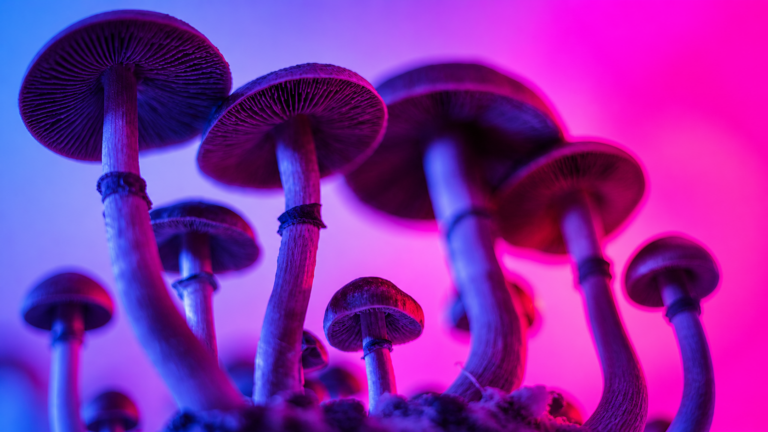
Magic mushrooms are fungi that naturally produce psilocybin and psilocin, two psychedelic compounds capable of altering human consciousness.
Psilocybin itself is biologically inactive until it is converted into psilocin inside the body after consumption. Psilocin then interacts primarily with serotonin receptors in the brain, particularly the 5-HT2A receptor, which researchers believe plays a major role in psychedelic effects.
There are more than 180 known species of psilocybin-containing mushrooms found across different parts of the world. Some grow naturally in forests and grasslands, while others are commonly cultivated indoors.
The most popular and widely cultivated species is Psilocybe cubensis, largely because it is relatively easy to grow and produces reliable psychedelic effects.
Within Psilocybe cubensis alone, there are many famous strains, including:
- Golden Teacher
- Penis Envy
- B+
- Mazatapec
- Albino A+
- Blue Meanies
Although many people casually refer to these as “different mushrooms,” most are technically genetic variations or strains within the same species.
Other species, such as Liberty Caps (Psilocybe semilanceata) or Flying Saucers (Psilocybe azurescens), are often significantly more potent than common cubensis mushrooms.
This variation in potency is one reason beginners should never assume all mushrooms produce the same intensity of effects.
How Psilocybin Affects the Brain
One of the reasons psychedelics fascinate researchers is the way they appear to temporarily alter communication patterns inside the brain.
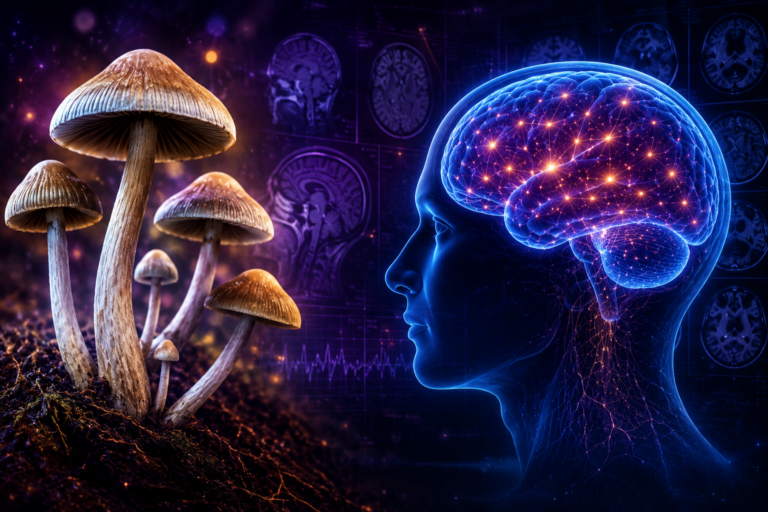
Brain imaging studies suggest psilocybin reduces activity in something called the Default Mode Network (DMN), a network associated with self-reflection, identity, rumination, and ego-based thinking.
Researchers believe this temporary disruption may help explain why some users experience:
- Ego dissolution
- Increased emotional openness
- Altered perspectives
- Enhanced creativity
- Feelings of connectedness
Many scientists also believe psilocybin may increase neuroplasticity, the brain’s ability to form new neural connections.
This area of research is still developing, but it has become one of the most important reasons why psychedelics are now being studied for depression, addiction, and trauma-related conditions.
Unlike stimulants or depressants, psychedelics do not simply “speed up” or “slow down” the brain. Instead, they appear to temporarily reorganize how different brain regions communicate with one another.
This is part of why psychedelic experiences can feel so unfamiliar, emotionally intense, and difficult to describe.
What Does a Mushroom Trip Actually Feel Like?
No two psychedelic experiences are exactly the same, which is one of the reasons magic mushrooms remain so fascinating to both researchers and users. Psilocybin experiences can range from deeply euphoric and emotionally healing to confusing, overwhelming, or intensely introspective depending on the person, the environment, and the dose involved.
The effects are influenced by several major factors:
- Dose
- Mushroom potency
- Body chemistry
- Emotional state
- Environment
- Previous psychedelic experience
At lower doses, many users describe mushrooms as emotionally and sensory-enhancing rather than reality-shattering. Colors may appear more vivid, music can feel far more immersive, and ordinary thoughts may suddenly seem unusually meaningful or emotionally charged. Some people become more social and laugh uncontrollably, while others become quiet and introspective.
As the dosage increases, the experience becomes significantly more immersive and psychologically intense. Visual distortions often intensify, patterns may appear to move or breathe, and the sense of time can become severely distorted. Minutes may feel like hours, and ordinary thoughts can spiral into deep philosophical reflection.
One of the most unique aspects of psilocybin is the emotional amplification it can create. Mushrooms often intensify emotions that already exist beneath the surface. Positive emotions may feel euphoric and deeply connected, while anxiety, sadness, or unresolved thoughts can also become impossible to ignore. This is one reason some people describe psychedelics as therapeutic tools rather than purely recreational substances.
At higher doses, some users report experiences involving ego dissolution, where the normal sense of self temporarily fades away. During these states, people may feel disconnected from their identity, their surroundings, or even the concept of time itself. Some describe these experiences as spiritual or life-changing, while others may find them frightening if they are unprepared.
Because psychedelic experiences are so mentally immersive, preparation plays a major role in determining whether a trip feels manageable or overwhelming.
Understanding “Set and Setting”
The concept of “set and setting” is considered one of the most important principles in psychedelic culture and harm reduction.
Your “set” refers to your internal mindset before taking psychedelics. This includes your emotional state, stress levels, expectations, personality, and overall mental health. Someone entering a psychedelic experience while stressed, emotionally unstable, or highly anxious is generally far more likely to experience paranoia or panic during the trip.
Your “setting” refers to the external environment surrounding the experience. Psychedelics tend to amplify external stimuli, meaning the atmosphere around you can heavily shape the direction of the trip. Calm music, comfortable surroundings, trusted people, and a safe environment can foster relaxation and emotional safety. Chaotic environments, loud strangers, arguments, or uncomfortable surroundings can quickly increase anxiety.
For beginners in particular, a controlled environment is extremely important. Most experienced users recommend taking mushrooms in a familiar and private place where there is no pressure to interact socially or handle responsibilities. Many people also prefer nature-based environments because psychedelic experiences often increase appreciation for natural surroundings.
A sober trip sitter can also be valuable during first experiences. Simply having a calm and trusted person nearby can significantly reduce panic if the experience becomes emotionally intense.
Many difficult psychedelic experiences are not caused by the mushrooms themselves, but rather by poor preparation, unsafe environments, emotional instability, or unexpectedly high doses.
How Long Do Magic Mushrooms Last?
A typical psilocybin experience lasts between 4 and 8 hours, although the perceived duration can feel much longer due to altered time perception during the trip.
The effects generally unfold in several phases.
The onset phase usually begins between 20 and 60 minutes after consumption. During this stage, users often notice subtle physical and mental changes beginning to develop. Colors may appear slightly brighter, thoughts may become more unusual or emotionally charged, and many people experience a noticeable “body sensation” as the mushrooms begin taking effect. Some beginners also report mild nausea during the onset, especially when consuming dried mushrooms directly.
The peak phase usually occurs around one to three hours after ingestion and represents the most intense part of the experience. During this stage, visual effects become significantly stronger, emotional sensitivity increases, and ordinary thought patterns may feel dramatically altered. Some people experience strong introspection, while others become immersed in music, visuals, or philosophical thinking.
This is also the phase where ego dissolution or spiritual-type experiences are most likely to occur at higher doses. Because the peak can feel psychologically overwhelming for inexperienced users, maintaining a calm environment is extremely important.
After the peak, the experience gradually transitions into the comedown phase. Visual effects slowly decrease, emotions stabilize, and thinking becomes more grounded again. Many users describe this stage as emotionally reflective or calming, particularly after an intense peak experience.
Even after the primary effects wear off, many people experience an “afterglow” lasting into the next day. This may involve elevated mood, mental clarity, emotional openness, or a lingering sense of calmness. Others simply feel mentally drained and prefer to rest after the experience.
The duration and intensity of all these phases depend heavily on dosage, metabolism, mushroom potency, and whether the mushrooms were consumed with food.
Common Beginner Mistakes
One of the biggest mistakes beginners make is assuming mushrooms are mild simply because they are natural. Psilocybin is an extremely powerful psychoactive compound capable of producing dramatic changes in perception and consciousness, especially at moderate to high doses.
Another common mistake is taking too much too quickly. Because potency varies heavily between mushroom species, strains, and individual batches, inexperienced users often underestimate how intense the experience can become. Some people consume additional mushrooms too early because they think the first dose “isn’t working,” only to become overwhelmed once the full effects develop.
The environment is another major factor. Taking mushrooms at loud parties, crowded public spaces, or stressful environments dramatically increases the risk of anxiety and panic. Psychedelics amplify surroundings and emotions, which means even small stressors can feel psychologically intense during a trip.
Many beginners also make the mistake of mixing mushrooms with alcohol or other substances. Combining substances can make psychedelic experiences far more unpredictable and increase the likelihood of confusion, nausea, or emotional instability.
One of the most important things beginners can understand is that preparation matters. People who research dosage, create a calm environment, clear their schedule, and approach psychedelics with realistic expectations are generally far more likely to have manageable experiences.
Risks and Side Effects
Psilocybin mushrooms are often considered physically safer than many other recreational substances, particularly because they are not known to cause fatal toxicity in normal doses. However, that does not mean they are risk-free.
The primary risks associated with mushrooms are psychological rather than physical. Psilocybin can produce intense emotional experiences that may become frightening or destabilizing in the wrong circumstances. Anxiety, paranoia, panic attacks, confusion, and emotional overwhelm are among the most common negative effects reported during difficult trips.
These reactions are far more likely when mushrooms are taken in stressful environments, at excessively high doses, or during periods of emotional instability. Individuals with personal or family histories of schizophrenia, bipolar disorder, or psychotic disorders are generally advised to avoid psychedelics entirely unless under professional medical supervision, as psychedelics may worsen underlying psychiatric vulnerabilities.
Another important risk is poor judgment while intoxicated. Psychedelics can dramatically alter perception and decision-making, increasing the likelihood of dangerous behavior, accidents, or panic-driven reactions in unsafe environments.
One of the most serious dangers comes from consuming unidentified wild mushrooms. Some toxic mushroom species closely resemble psilocybin-containing mushrooms and can cause severe organ failure or death if consumed accidentally. Foraging should only be done by highly experienced experts with proper identification knowledge.
While modern psychedelic discussions often focus heavily on potential therapeutic benefits, responsible education also means acknowledging that these substances can produce psychologically intense and unpredictable experiences that are not suitable for everyone.
The Modern Psychedelic Renaissance
Psilocybin research is currently experiencing what many scientists describe as a modern psychedelic renaissance. After decades of political stigma and limited research opportunities, psychedelics have re-entered mainstream scientific discussion in a major way.
Universities and medical institutions are currently studying psilocybin for:
- Depression
- PTSD
- Anxiety
- Addiction
- OCD
- End-of-life psychological distress
In recent years, institutions such as Johns Hopkins University, Imperial College London, and NYU have published highly influential studies examining the therapeutic potential of psychedelic-assisted therapy. Some clinical trials involving treatment-resistant depression have shown results that many researchers consider remarkably promising compared to conventional psychiatric treatments.
Part of the excitement surrounding psychedelic research comes from the possibility that psilocybin may help people break deeply ingrained mental patterns associated with depression, trauma, addiction, and rumination. Brain imaging studies suggest psychedelics temporarily alter communication between brain regions, potentially allowing for increased emotional processing and psychological flexibility.
Researchers also believe the combination of psychotherapy and psychedelic experiences may play a major role in the effectiveness observed in clinical trials. Unlike traditional antidepressants, which are typically taken daily, psilocybin therapy often involves only one or several guided sessions combined with extensive therapeutic support before and after the experience.
Still, scientists consistently warn against oversimplifying the research. Clinical psychedelic therapy is conducted under highly controlled conditions involving medical screening, professional supervision, carefully measured doses, and psychological integration afterward. Recreational use in uncontrolled environments is fundamentally different from modern therapeutic research settings.
Even so, public perception around psychedelics has shifted dramatically over the last decade. What was once viewed almost exclusively as dangerous counterculture drug use is now increasingly discussed through the lens of neuroscience, psychology, mental health, and human consciousness itself.
Conclusion
Magic mushrooms are among the most fascinating substances currently being studied in neuroscience and mental health research.
For some people, psilocybin experiences can feel deeply meaningful, emotionally healing, creatively inspiring, or spiritually profound. For others, they may be confusing, overwhelming, or psychologically difficult.
The difference often comes down to preparation, dosage, environment, and individual mental state.
As public interest in psychedelics continues growing, education and harm reduction are becoming more important than ever. Beginners should focus on realistic expectations, responsible use, and understanding both the potential benefits and risks involved.
Psilocybin is not simply a party drug or a miracle cure. It is a powerful psychedelic substance capable of producing intense alterations in perception and consciousness.
Approached responsibly, magic mushrooms can offer fascinating insights into the mind, emotion, and human perception itself.