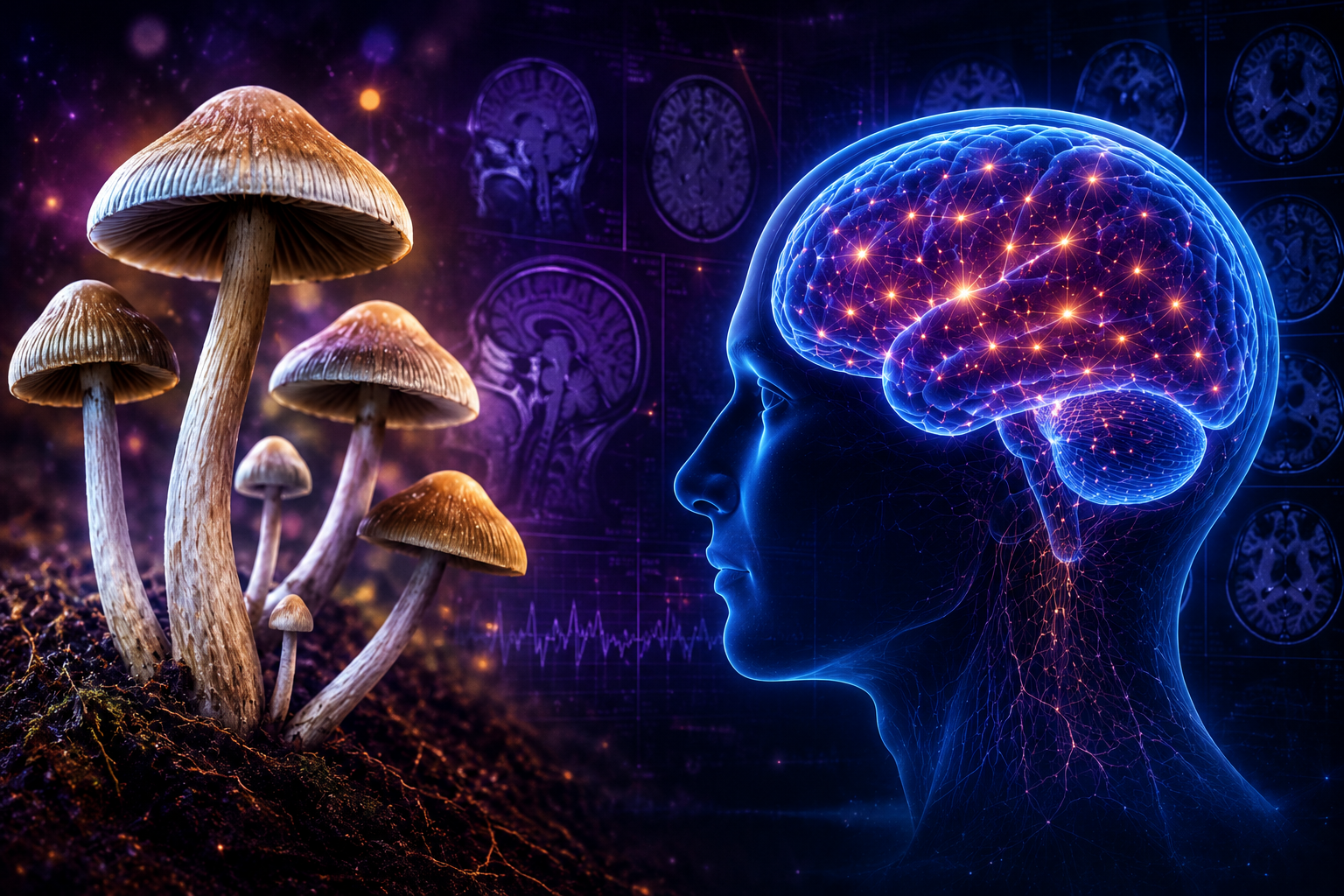
Study Finds Lasting Brain Changes After Single Psilocybin Dose
Key Takeaways
- A new Nature Communications study found measurable brain changes weeks after a single 25mg psilocybin session
- Researchers observed altered brain connectivity, increased brain entropy, and changes in white matter imaging markers
- Participants also reported improvements in emotional well-being and psychological insight
- Scientists say the findings are promising but still preliminary due to the study’s small size
- The research adds to growing evidence that psychedelics may temporarily increase neuroplasticity in the human brain
Introduction
A single dose of psilocybin, the psychedelic compound found in “magic mushrooms,” may cause measurable changes in the human brain that persist weeks after the experience, according to a newly published study in Nature Communications.
The research is already attracting global attention because it goes beyond the usual discussions around mood and perception. Scientists observed measurable differences in brain imaging scans one month after participants received a 25mg dose of psilocybin under controlled clinical conditions.
While headlines describing “anatomical brain changes” may sound dramatic, researchers are not claiming that psilocybin permanently rewires the brain overnight. Instead, the study adds to a growing body of evidence suggesting psychedelics may temporarily increase neuroplasticity and disrupt rigid patterns of brain activity associated with conditions like depression, PTSD, and addiction.
The findings arrive during a major shift in psychedelic research worldwide, with universities, pharmaceutical companies, and regulators increasingly exploring the therapeutic potential of compounds once considered taboo.
What the Study Actually Looked At
The study involved 28 healthy adults with no prior psychedelic experience.
Participants first received a very small 1mg dose intended to function almost like a placebo. One month later, they underwent a supervised session using a full 25mg dose of psilocybin.
Researchers then analyzed the participants using several advanced brain imaging methods, including:
- Functional MRI scans
- EEG recordings
- Diffusion Tensor Imaging (DTI)
These tools allowed scientists to examine both brain activity and structural markers associated with communication pathways within the brain.
One month after the psychedelic session, researchers identified measurable differences in white matter diffusion markers, along with altered patterns of brain connectivity.
The Brain Entropy Finding
One of the most important findings involved something called “brain entropy.”
Under normal conditions, the brain tends to operate within relatively stable and predictable activity patterns. During the psilocybin experience, however, researchers observed a significant increase in entropy, meaning brain activity became more flexible, dynamic, and less constrained.
Scientists believe this temporary increase in flexibility could help explain why some people report profound emotional breakthroughs or changes in perspective during psychedelic experiences.
Participants who experienced the strongest increases in brain entropy also tended to report:
- Greater emotional insight
- Improved psychological wellbeing
- Increased cognitive flexibility
This connection between subjective experience and measurable brain activity is one reason psychedelic research has gained serious scientific interest over the last decade.
Why Researchers Are Excited About Neuroplasticity
The study also fits into a broader theory surrounding psychedelics and neuroplasticity.
Neuroplasticity refers to the brain’s ability to reorganize itself by forming new neural connections. Researchers increasingly suspect that psychedelics may temporarily reopen a more adaptable state in the brain, allowing people to break out of deeply ingrained thought patterns.
This could have major implications for mental health treatment.
Conditions like depression, PTSD, addiction, and OCD are often associated with repetitive negative thinking loops and rigid behavioral patterns. Some scientists believe psychedelic-assisted therapy may help disrupt those cycles long enough for new perspectives and healthier behaviors to emerge.
That does not mean psilocybin is a miracle cure. However, studies like this continue to strengthen the scientific argument that psychedelics deserve serious medical investigation rather than decades-old stigma.
Important Limitations of the Study
Despite the excitement, researchers themselves stressed that the findings are still preliminary.
The study only involved 28 participants, all of whom were healthy volunteers rather than psychiatric patients. Larger and longer-term studies will be needed to determine whether the observed brain changes are truly beneficial, temporary, or clinically meaningful.
It is also important to understand that brain imaging markers do not automatically translate into improved mental health outcomes.
The controlled clinical environment matters as well.
Participants received pharmaceutical-grade psilocybin under supervision with careful screening and support. That is very different from uncontrolled recreational use, where dosage, mental state, and environment can vary dramatically.
Psychedelics can also produce intense psychological experiences and may not be safe for everyone, especially individuals with certain psychiatric conditions or a family history of psychosis.
The Bigger Picture for Psychedelic Research
The timing of this study is significant.
Psychedelic research has accelerated rapidly over the last several years, particularly in the United States and Europe. Universities like Johns Hopkins, Imperial College London, and UCSF are now conducting large-scale investigations into psilocybin and other psychedelic compounds.
Meanwhile, regulators continue to debate how psychedelic therapies should be handled in the future.
Several U.S. states and cities have already moved toward decriminalization policies, while companies are investing billions into psychedelic medicine development.
As research expands, studies like this could help shift public perception away from decades of fear-based narratives and toward a more evidence-driven discussion about both the risks and potential benefits of psychedelics.
For now, scientists remain cautious but optimistic.
The new findings do not prove that magic mushrooms “upgrade” the human brain, but they do provide another compelling piece of evidence that psilocybin can produce measurable and lasting effects on how the brain functions.
Conclusion
The idea that a single psychedelic experience could leave measurable traces in the brain weeks later would have sounded fringe just a decade ago. Today, it is being studied inside some of the world’s leading research institutions.
This latest study strengthens the growing scientific case that psilocybin may influence neuroplasticity, emotional processing, and brain connectivity in ways researchers are only beginning to understand.
At the same time, experts continue to emphasize caution, proper clinical oversight, and the need for larger studies before drawing definitive conclusions.
As psychedelic science moves further into the mainstream, one thing is becoming increasingly clear:
The conversation around psilocybin is no longer just about counterculture. It is rapidly becoming a serious topic of discussion across neuroscience, mental health, and the future of medicine.
You can read the full study here.