
What Is THC? The Compound That Defines Cannabis
Key Takeaways
- THC is the primary psychoactive compound in cannabis
- It interacts with the body’s endocannabinoid system
- Effects vary widely depending on dose and individual biology
- It offers real medical benefits but also carries risks
- Modern cannabis potency makes responsible use more important than ever
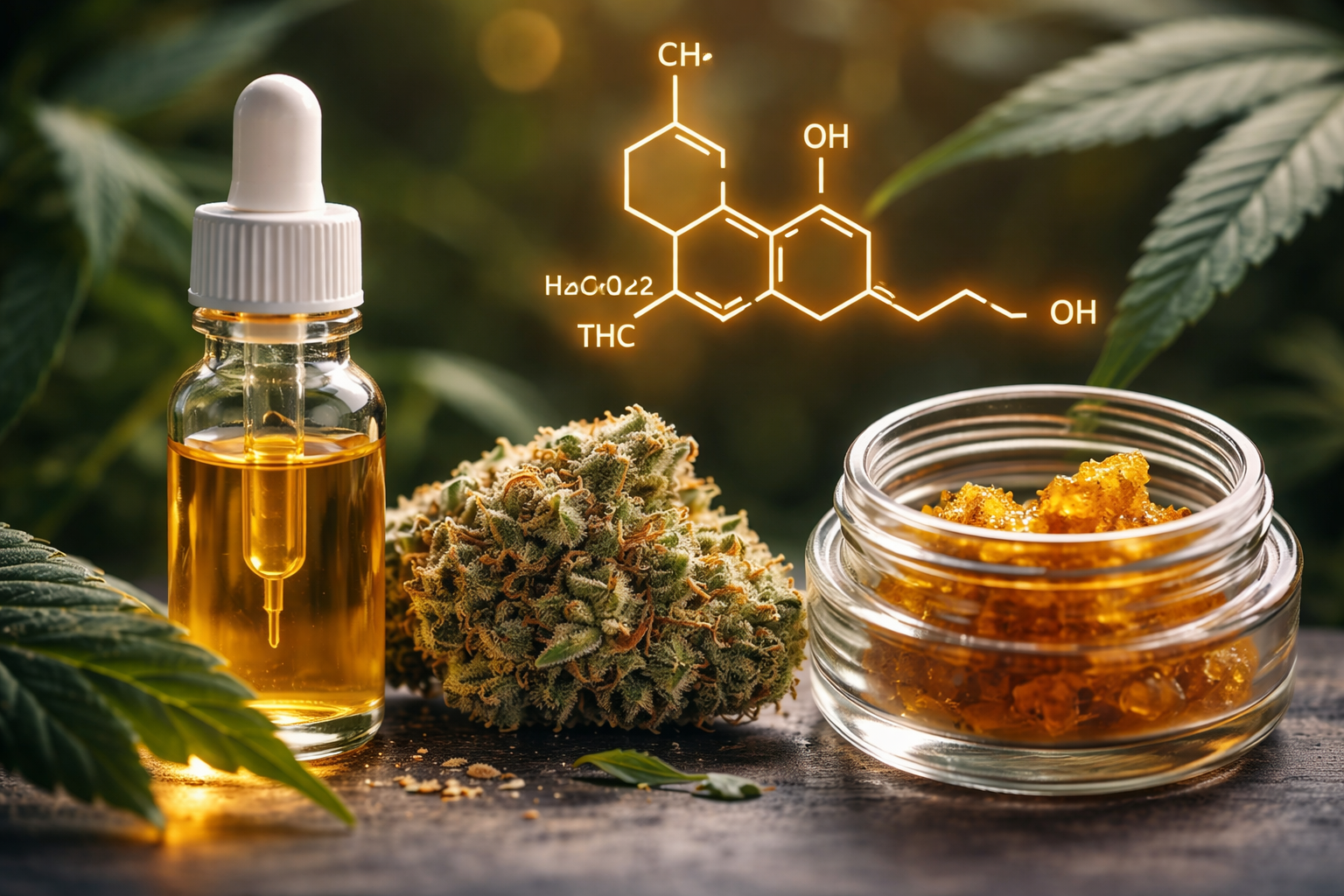
For most people, cannabis begins and ends with one molecule: THC.
It’s the reason weed gets you high. The reason some people feel relaxed, while others feel anxious. The reason cannabis has been both demonized and celebrated for decades.
But THC is more than just the “high.” It is a biologically active compound that interacts directly with one of the most important regulatory systems in the human body — influencing mood, memory, pain, appetite, and perception.
Understanding THC is not just about understanding cannabis. It’s about understanding how your brain and body respond to it.
From Plant to Psychoactive: How THC Is Created
In its natural state, cannabis doesn’t actually produce THC in the form most people recognize.
Instead, the plant contains THCA — a non-psychoactive precursor. It’s only when heat is applied, through smoking, vaping, or cooking, that THCA converts into THC. This process, known as decarboxylation, is what activates the compound’s psychoactive properties.
This distinction matters. It explains why raw cannabis won’t get you high — and why consumption method plays such a critical role in the experience.
How THC Works in the Body
THC’s effects are driven by its interaction with the endocannabinoid system (ECS), a complex network of receptors responsible for maintaining internal balance.
When THC enters the body, it primarily binds to CB1 receptors in the brain. These receptors are involved in regulating mood, memory, coordination, and perception.
That’s why THC doesn’t produce just one effect — it produces many, often at the same time.
Depending on the dose, environment, and individual biology, THC can create:
- relaxation
- euphoria
- altered perception
- heightened sensory awareness
Or, in some cases:
- anxiety
- confusion
- paranoia
The difference often comes down to dosage and tolerance.
Why THC Feels Different for Everyone
One of the most misunderstood aspects of THC is variability.
Two people can consume the same product and have completely different experiences. This is not random — it’s driven by biology.
Factors that influence THC’s effects include:
- individual tolerance
- body fat composition
- metabolism
- mental state
- environment
This is why modern cannabis use requires more awareness than ever before. Today’s products are significantly more potent than those of previous decades, making dose control critical.
The Benefits of THC — Beyond the High
While THC is often associated with recreational use, its medical relevance is substantial.
It has been shown to:
- reduce chronic and neuropathic pain
- stimulate appetite
- alleviate nausea, particularly in chemotherapy patients
- relax muscles and reduce spasticity
In lower doses, some users also report reduced anxiety and improved mood, although this effect can reverse at higher doses.
The key distinction is that THC is not universally beneficial — its effects are dose-dependent and highly individual.
The Risks: Where THC Becomes a Problem
As cannabis has become stronger, the conversation around THC has shifted.
Higher potency means stronger effects — but also higher risk.
Short-term side effects can include impaired coordination, increased heart rate, and cognitive disruption. In some users, especially those sensitive to THC, anxiety or panic can occur.
Long-term use introduces more complex considerations. Frequent high-dose exposure has been associated with:
- reduced short-term memory performance
- increased tolerance
- potential dependence
While cannabis dependence rates are a lot lower than those of substances like nicotine or alcohol, they are not negligible.
This is where modern cannabis culture often lags behind science — potency has increased faster than consumer awareness.
Tolerance: The Hidden Driver of Consumption
With repeated exposure to THC, the brain adapts.
CB1 receptors become less responsive, meaning the same dose produces weaker effects. As a result, users often increase consumption to achieve the same experience.
This cycle is known as tolerance.
The only reliable way to reset tolerance is through abstinence — commonly referred to as a tolerance break. Even short breaks can significantly restore sensitivity to THC.
Understanding tolerance is essential, especially in a market where high-potency products are widely available.
How Consumption Method Changes the Experience
THC does not behave the same way across all consumption methods.
When inhaled, it enters the bloodstream quickly, producing near-immediate effects that typically last a few hours.
When consumed as an edible, THC is metabolized by the liver into a more potent compound, resulting in delayed but often stronger and longer-lasting effects.
This difference is one of the most common causes of overconsumption, particularly among inexperienced users.
The method matters — often more than the dose itself.
THC in Modern Cannabis Culture
Today’s cannabis landscape is defined by potency.
In the past, THC levels in cannabis flower were significantly lower. Today, high-THC strains and concentrates dominate the market, sometimes exceeding levels that would have been considered extreme just a decade ago.
This shift has changed how cannabis is experienced — and how it should be approached.
More THC does not always mean a better experience. In many cases, it increases the likelihood of negative effects without improving the desired ones.
Conclusion: Understanding THC Means Using It Better
THC is not inherently good or bad.
It is a powerful compound that interacts directly with the brain and body, capable of producing both beneficial and adverse effects depending on how it is used.
The difference between a positive and negative experience often comes down to awareness of dosage, tolerance, and individual response.
As cannabis continues to evolve, understanding THC is no longer optional. It is essential.
Series Note
This article is part of International High Life’s core cannabis knowledge series, designed to provide clear, credible, and practical insights into how cannabis works in the real world.