Cannabis Possession Arrests Still Accounted for Over 22% of U.S. Drug Arrests in America
Key Takeaways
-
Cannabis possession remains one of the most enforced drug offenses in the U.S.
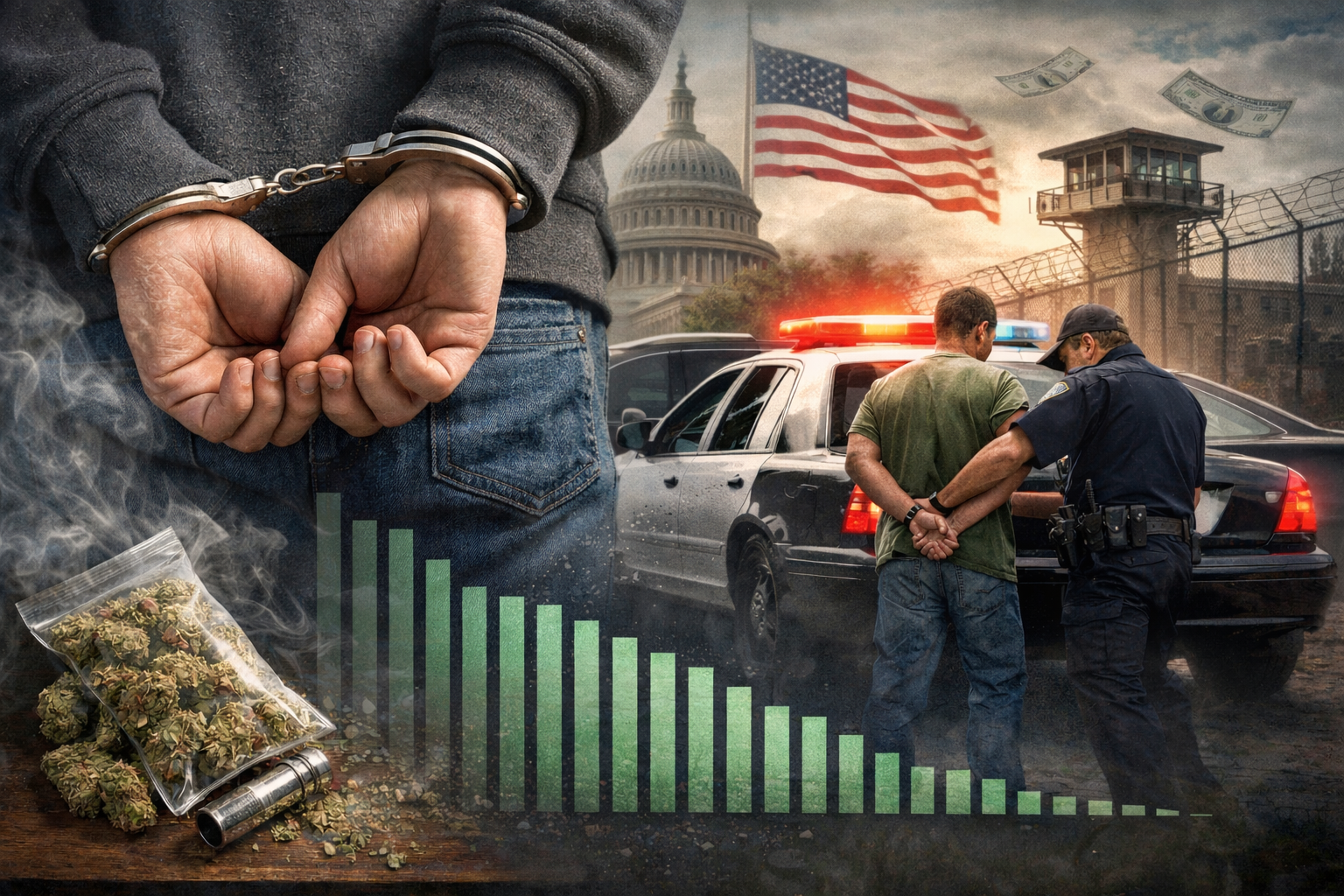
In 2024, more than 187,000 people were arrested for simple cannabis possession, accounting for over 22% of all drug arrests nationwide. -
Arrest numbers are down from historic highs — but far from eliminated.
Cannabis arrests peaked in 2007 with over 870,000 cases, yet enforcement remains deeply embedded despite legalization in nearly half the country. -
Most cannabis arrests involve non-violent conduct.
Over 90% of cannabis-related arrests in 2024 were for possession, not sales or manufacturing. -
Legalization has reduced arrests unevenly, not structurally.
Enforcement has declined in legal states but remains aggressive in prohibition states, keeping national arrest totals high. -
Cannabis arrests continue to feed the broader criminal justice system.
Even low-level possession cases generate jail stays, court costs, probation, and fines — sustaining enforcement and incarceration systems without improving public safety.
Despite legalization expanding across the United States and public opinion shifting decisively in favor of reform, cannabis possession arrests remain one of the most common forms of drug enforcement nationwide.
The Numbers: Cannabis Arrests in 2024
- 204,036 total cannabis-related arrests were recorded nationwide in 2024
- 187,792 arrests (92%) were for simple cannabis possession
- 16,244 arrests were categorized as sales or manufacturing
- 831,446 total drug-related arrests occurred across all substances
- Cannabis offenses accounted for more than 22% of all U.S. drug arrests
Do We Have Cannabis Arrest Numbers for 2025?
- 2024 is the most recent year with finalized nationwide arrest data
- 2025 cannabis arrest data has not been released
- Comprehensive 2025 figures are expected in late 2026, depending on reporting timelines
Historical Background: How Cannabis Became Central to Drug Policing
The Rise of Cannabis Enforcement
- Widespread across demographics
- Highly visible
- Easy to detect and charge
Peak Arrests: The 2000s Explosion
- Cannabis accounted for 48% of all drug arrests nationwide
- The vast majority were for simple possession
- Violent crime was already declining, yet drug arrests continued to rise
Note: The FBI changed its crime data reporting methodology in 2021, limiting direct year-to-year comparisons. Even so, cannabis continues to represent a disproportionately large share of drug enforcement.
Why Cannabis Arrests Still Happen
1. Cannabis Is Still the Easiest Drug to Police
- Easy to detect
- Commonly linked to traffic stops and street encounters
- Low-cost to enforce
2. Federal Prohibition Still Shapes Enforcement
- Enables aggressive enforcement in prohibition states
- Allows federal–local cooperation
- Shields police departments from accountability
Private Prisons, Mass Incarceration, and Cannabis Arrests
Cannabis as a System Intake Offense
- Jail stays (often pretrial)
- Court proceedings
- Probation or supervision
- Fines, fees, and mandatory programs
The Role of Private Prisons
- Earn revenue based on occupied beds
- Benefit from stable incarceration rates
- Operate facilities housing both pretrial detainees and sentenced individuals
Why Cannabis Matters Economically
- Non-violent (low political risk)
- High volume
- Procedurally simple
- Disproportionately enforced against economically vulnerable persons
Conclusion: A Drug War That Narrowed, Not Ended
- 204,036 cannabis-related arrests were recorded
- 187,792 were for simple possession
- Cannabis still accounted for over one-fifth of all U.S. drug arrests
Outlook: What Happens Over the Next Few Years
- Cannabis arrests will likely continue to decline slowly, not disappear
- Prohibition states will account for a growing share of arrests
- Federal rescheduling may reduce penalties, but will not end possession enforcement
- Full federal legalization or descheduling would have the largest impact, but it remains politically uncertain