How to Know If Your Cannabis Has Gone Bad
Cannabis doesn’t last forever. Whether you’ve had a stash sitting around for months or you just bought something questionable, knowing how to tell if your weed is bad is essential for both safety and quality.
Bad cannabis isn’t just less potent. In some cases, it can actually be harmful, especially when mold or contamination is involved. The challenge is that not all signs are obvious at first glance.
In this guide, we break down exactly how to identify bad weed, what happens as cannabis ages, and when you should throw it away.
Why Weed Goes Bad
Cannabis is a plant product, which means it naturally degrades over time. The main drivers behind this process are air, light, heat, and moisture.
Oxygen causes oxidation, slowly breaking down cannabinoids like THC. UV light accelerates this process, degrading both cannabinoids and terpenes. Heat speeds up chemical reactions, while excess moisture creates an environment where mold and bacteria can thrive.
Improper storage is the biggest factor here. Cannabis that’s left in plastic bags, exposed to sunlight, or stored in fluctuating temperatures will degrade significantly faster than properly stored flower.
If you want a full breakdown of how to preserve potency and freshness, this is exactly where proper storage comes into play. (Internal link: How to Store Cannabis Properly)
Visual Signs Your Weed Is Bad
1. Mold or White Fuzz
This is the most serious warning sign.
Mold on cannabis can appear as:
- White or gray fuzzy patches
- Powdery mildew-like coating
- Thin webbing between buds
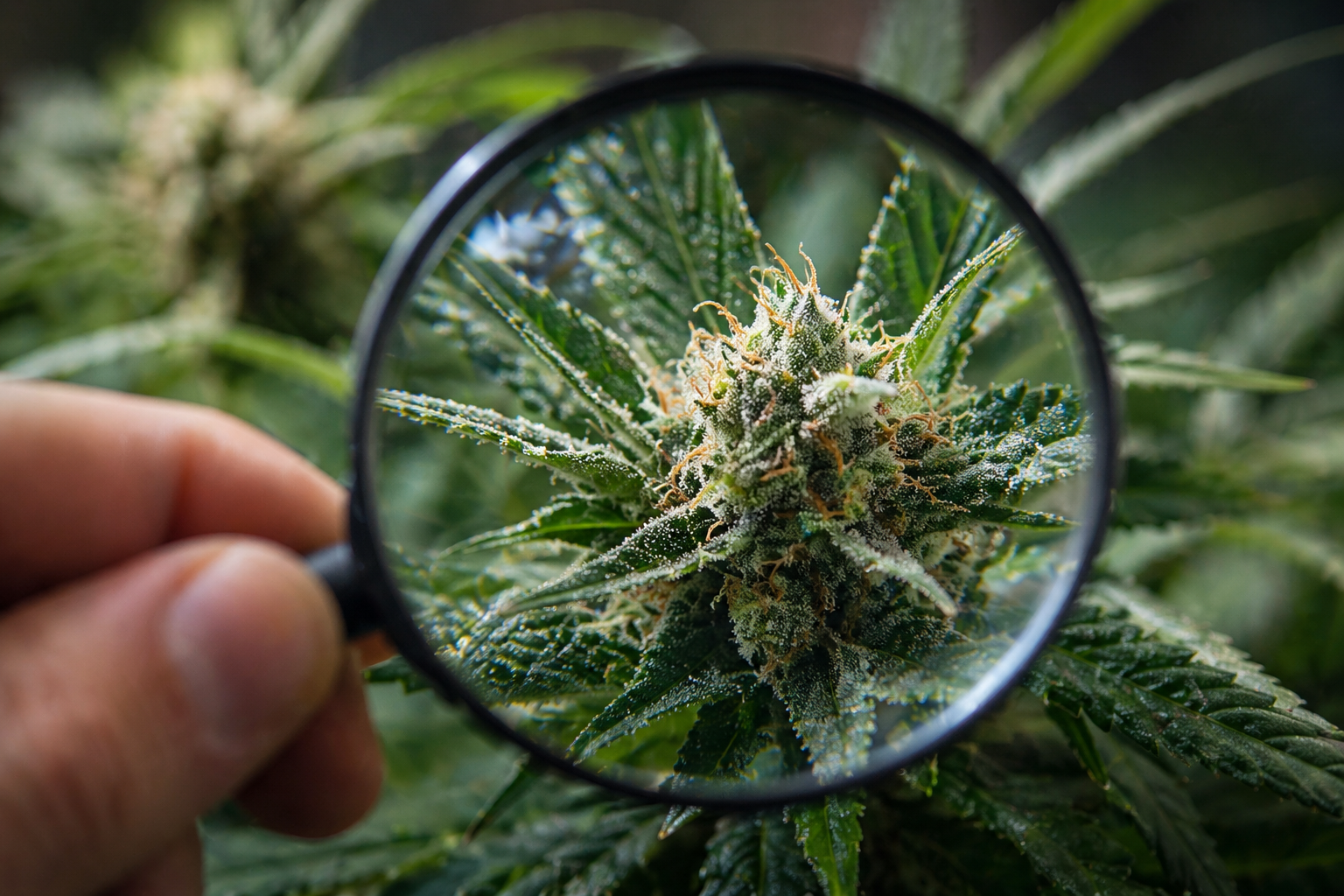
Sometimes it’s subtle and hidden within dense buds, making careful inspection important. Breaking a nug open can reveal mold that isn’t visible on the surface.
Consuming moldy cannabis can expose you to harmful spores that may lead to respiratory irritation, allergic reactions, or infections. This is especially risky for people with weakened immune systems.
If there’s any doubt, it’s not worth the risk. Throw it away.
2. Brown, Yellow, or Dull Appearance
Fresh cannabis should look vibrant and “alive,” typically featuring rich green tones, orange pistils, and a frosty coating of trichomes.
As weed ages or degrades, it often turns:
- Brown or tan
- Yellowish
- Visibly dull with no shine
This is usually the result of oxidation and terpene loss. While not necessarily dangerous on its own, it’s a clear sign that quality has dropped significantly.
3. Loss of Trichomes
Trichomes are where the potency lives. They contain cannabinoids such as THC and CBD, as well as terpenes that contribute to aroma and effects.
When weed is old or poorly handled, trichomes can:
- Dry out and fall off
- Degrade due to light and oxygen
- Lose their milky or crystalline appearance
If your bud looks flat and lacks that frosty, sticky layer, you’re dealing with degraded cannabis that won’t deliver the same experience.
Smell Test: What Your Nose Tells You
Your nose is one of the most reliable tools.
High-quality cannabis has a strong, distinct aroma, often described as fruity, gassy, earthy, or citrusy, depending on its terpene profile.
Bad weed, on the other hand, tends to smell:
- Musty or like a damp basement
- Similar to hay or dry grass
- Weak or completely faded
That musty smell is particularly important. Even if you don’t see visible mold, the odor can indicate microbial growth.
A loss of smell also signals terpene degradation, which directly impacts flavor and overall experience.
Texture and Breakdown Test
Touch tells you a lot about the condition of your cannabis.
Properly cured weed should feel slightly sticky and break apart with a bit of resistance. It shouldn’t turn to dust, nor should it feel wet.
Bad weed typically falls into one of two extremes:
Too Dry:
- Crumbles instantly
- Harsh to smoke
- Burns too fast
Too Moist:
- Feels spongy or dense
- Doesn’t break apart cleanly
- Higher risk of mold development
Overly dry weed is usually the result of poor storage or age, while excess moisture often points to improper curing or exposure to humidity.
Can Expired Weed Make You Sick
This is where the distinction matters.
Old weed that is simply dry or degraded is not inherently dangerous. It may taste harsh, feel weaker, and produce a less enjoyable high, but it’s generally safe.
Moldy or contaminated cannabis is a different story.
Inhaling mold spores can lead to:
- Coughing and throat irritation
- Headaches
- Respiratory issues
In rare cases, especially with compromised immune systems, it can cause more serious complications.
If you ever experience irritation when smelling or smoking cannabis, stop immediately.
How Old Weed Changes the Effects
Over time, THC degrades into CBN. This chemical shift changes the overall effect profile of the cannabis.
Instead of a strong, euphoric high, older weed often produces:
- Mild or dull effects
- Increased sedation
- Reduced flavor intensity
This is why old cannabis is sometimes associated with a “sleepier” experience. While that might be desirable for some, it’s usually not the intended effect of the original strain.
When You Should Throw Weed Away
We know that this is a very sensitive topic, and most of you would probably never throw away your weed, but you should throw out your weed immediately if:
- You see visible mold
- It smells musty or off
- It feels damp or suspicious
- It causes irritation when handled or smelled
If the issue is only dryness or age, it’s not dangerous—but expectations should be adjusted. The quality will be noticeably lower.
How to Keep Your Weed Fresh Longer
Preventing bad weed starts with proper storage.
To preserve your cannabis:
- Use airtight glass jars instead of plastic
- Store in a cool, dark place
- Avoid temperature fluctuations
- Maintain humidity levels between 55–62%
These conditions slow down degradation and significantly reduce the risk of mold.
If you’re serious about maintaining quality, proper storage is non-negotiable.
Conclusion
Knowing how to tell if your weed is bad comes down to three simple checks: appearance, smell, and texture.
Moldy cannabis should never be consumed under any circumstances. Old cannabis, while not dangerous, offers a noticeably worse experience in potency, flavor, and smoothness.
If you want consistent quality, it’s not just about buying good weed—it’s about storing it correctly and knowing when it’s no longer worth using.